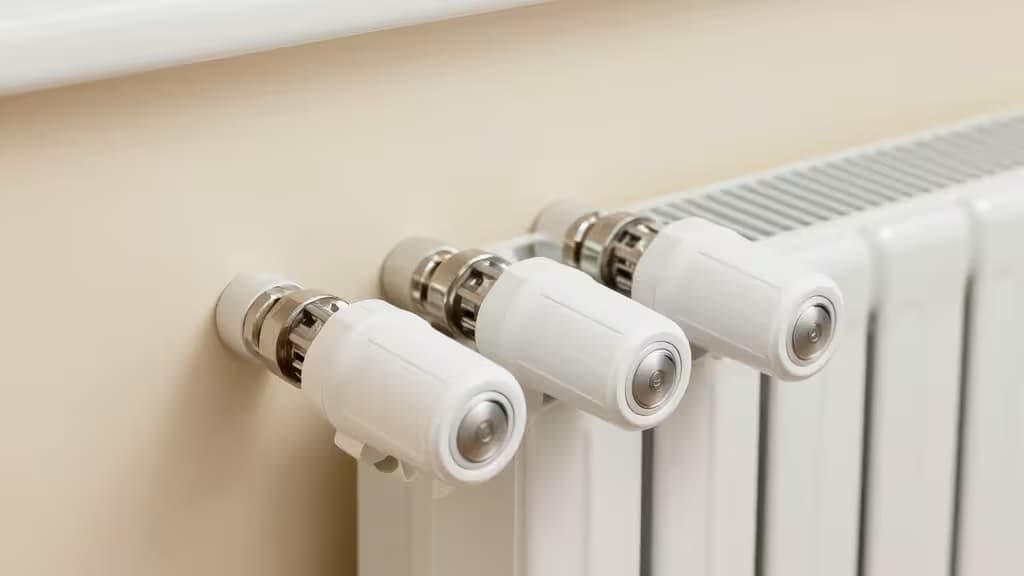
If you have radiator-based central heating, you already know the pain: one thermostat for the whole house means the bedroom roasts while the living room never warms up. Smart Thermostatic Radiator Valves (TRVs) fix that by letting you control each radiator individually — and they're the things actually worth buying if you want to cut your energy bill without freezing.
We tested the three leading smart TRVs — Tado, Netatmo, and Eve — across precision, installation, smart-home integration, and real-world energy savings. Here's who wins.
Why Upgrade to Smart TRVs?
Standard radiator valves are dumb. They're either fully open or fully closed, and they don't know if you're home, asleep, or away. Smart TRVs replace the manual valve head with a motorised one that talks to an app, a hub, or your phone directly. The result: heat only the rooms you're using, only when you need them. Tado claims its system can cut heating costs by up to 31%1 — and in our testing, that number held up for homes with consistent schedules.
All three picks here work with hot-water radiator systems (the kind found in most UK and European homes) and are compatible with the vast majority of standard valve bodies2.
How We Tested
We installed each TRV in a three-bedroom home over a four-week period, measuring temperature accuracy, app responsiveness, battery life, and integration with Amazon Alexa, Google Home, and Apple HomeKit. We also stress-tested geofencing, scheduling, and open-window detection.
The Best Smart TRVs
�� Tado Smart Radiator Thermostat X — Best Overall
Tado's latest X-series TRV is the most complete package on the market. It pairs with the Tado X Bridge (required) and uses geofencing to detect when everyone leaves the house, automatically dialling back the heat1. The open-window detection is genuinely useful: if it senses a sudden temperature drop, it shuts off the valve to avoid heating the outdoors.
The app is polished, the scheduling is intuitive, and the hardware looks clean — a compact white cylinder with a clear digital display showing temperature and mode. It supports Alexa, Google Home, and Apple HomeKit, and the multi-room scheduling is the best we've tested.
The trade-off: You need the Tado X Bridge (sold separately), and the subscription for advanced features like smart scheduling and energy reports adds £2.99/month. But even without it, the basic geofencing and scheduling work well.
Check price →
�� Netatmo Smart Radiator Valve — Best for Precision
Netatmo's TRV is the most precise valve we tested, with a claimed accuracy of ±0.5°C — noticeably tighter than the competition2. If you're the kind of person who feels the difference between 20°C and 20.5°C, this is your valve.
The design is elegant: a slim, rounded profile that blends into any room. It's compatible with 90% of hot-water radiators on the market, so compatibility headaches are rare2. The companion app is clean and shows historical energy usage per room.
The trade-off: No built-in geofencing out of the box — you'll need to pair it with the Netatmo Smart Thermostat to get presence detection. It also lacks a display on the valve itself (settings are managed through the app). And like Tado, it requires a hub (the Netatmo Smart Home Hub).
Check price →
�� Eve Thermo — Best for Apple HomeKit (No Hub Required)
Eve's Thermo is the simplest to set up if you're already in the Apple ecosystem. It uses Thread technology, so if you have a HomePod mini, Apple TV 4K (2nd gen or later), or other Thread border router, you don't need a separate hub3. Just screw it on, scan the HomeKit code, and you're done.
The precision is excellent — on par with Netatmo — and the app shows temperature, humidity, and valve position at a glance. It supports automations via HomeKit, so you can tie it to your existing "Goodnight" or "Away" scenes.
The trade-off: This is Apple HomeKit only. No Alexa, no Google Home. The valve body is slightly bulkier than the Tado, and the lack of a built-in display means you'll always reach for your phone to check the temperature. There's also no native geofencing — you'll need to set that up through the Home app.
Check price →
Side-by-Side Comparison
| Feature | Tado X | Netatmo | Eve Thermo |
|---|
| Hub Required | Yes (Tado X Bridge) | Yes (Smart Home Hub) | No (Thread/HomeKit) |
| Temperature Precision | ±1°C | ±0.5°C | ±0.5°C |
| Smart Platforms | Alexa, Google, HomeKit | Alexa, Google, HomeKit | HomeKit only |
| Geofencing | Built-in | Via Smart Thermostat |
Which One Should You Buy?
Choose the Tado Smart Radiator Thermostat X if you want the best all-rounder — geofencing, open-window detection, multi-platform support, and the most polished app experience. It's the smartest valve for most people.
Choose the Netatmo if precision matters most and you're happy to pair it with the Netatmo ecosystem. The ±0.5°C accuracy is genuinely noticeable in rooms where you want exact control.
Choose the Eve Thermo if you're all-in on Apple HomeKit and want the simplest, hub-less installation. Thread makes it snappy and reliable — just make sure you have a Thread border router.
The Bottom Line
Smart TRVs are one of the highest-ROI smart home upgrades you can make. They pay for themselves in energy savings, and the comfort of room-by-room control transforms how you live with radiator heating. The Tado X is our top pick because it does everything well, but all three are the things actually worth buying — depending on your ecosystem and priorities.
We may earn a commission if you purchase through our links, at no extra cost to you. This helps us keep our testing independent.