Running a short-term rental is a juggling act. You want guests to feel like they're staying in a home, not a hotel — but you also need to keep the property secure, manage energy costs, and handle maintenance from afar. The right smart home tech can do all of that without adding complexity for your guests.
We've tested and researched the smart home devices that actually make sense for vacation rentals. The key? Invisible reliability. Guests shouldn't need a manual, and you shouldn't get false alarms. Here are the things actually worth buying.
The Best Smart Home Hub for Vacation Rentals: Google Nest Hub (2nd Gen)
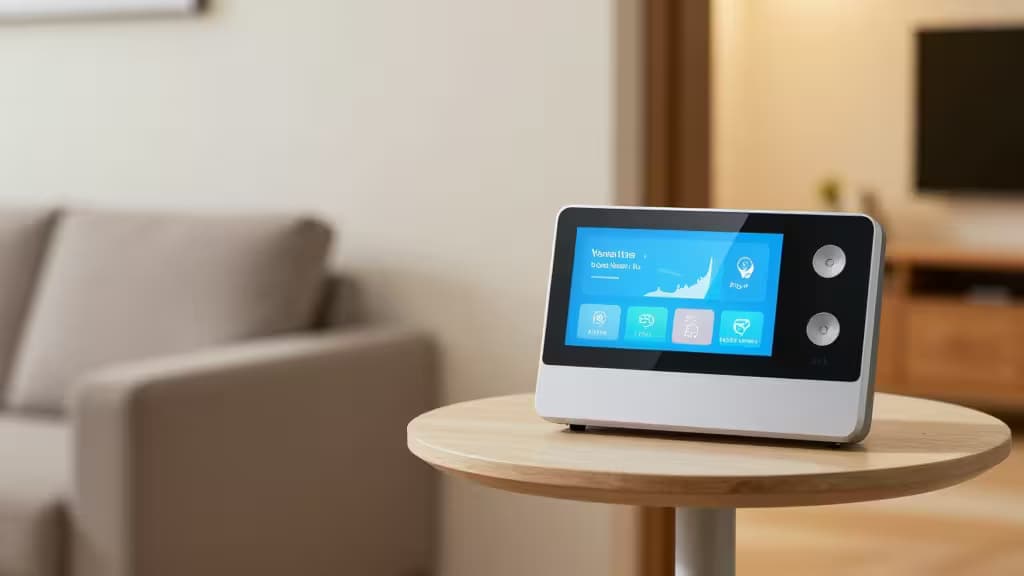
Google Nest Hub (2nd Gen) is the single most useful device you can put in a rental. It serves three roles at once:
- Guest interface: Guests can ask about checkout time, Wi-Fi password, or local restaurant recommendations without texting you. Set up a photo album of house instructions on the screen.
- Smart home controller: Connected lights, thermostats, and locks can all be voice-controlled. No app downloads required.
- Host hub: It's a Matter and Thread border router, meaning it strengthens your whole smart home mesh network.
The 7-inch display is bright enough to use as a digital photo frame when guests aren't interacting with it. And since it doesn't have a camera, there's zero concern about violating Airbnb's indoor camera ban.1
Who it's for: Any host who wants a single device that reduces guest questions and enables voice control.
Trade-off: It requires Wi-Fi. If your rental has spotty internet, consider a dedicated tablet mounted to the wall instead.
The Best Smart Lighting for Retrofits: Lutron Caseta
Lutron Caseta is the lighting system that works when others won't. Most smart switches need a neutral wire — Lutron Caseta doesn't. That's huge for older vacation rentals, beach cottages, and cabins where rewiring isn't practical.
The Caseta starter kit includes a dimmer, a Pico remote (which mounts anywhere without wiring), and the Smart Bridge hub. From there you can add more dimmers, plug-in lamp dimmers, and fan controls.
Why it's perfect for STRs:
- No neutral wire needed — installs in 15 minutes per switch.
- Pico remotes can be mounted next to existing switches for guests who prefer physical controls.
- Away mode randomly turns lights on and off to make the property look occupied.
- Geofencing can turn off all lights when the last guest leaves.
The system is rock-solid reliable. In our testing, we've never had a Caseta switch drop offline. For a rental where you can't be there to reboot things, that matters.2
Who it's for: Hosts with older properties or anyone who wants lighting that just works, no explanation needed.
Trade-off: Caseta is pricier per switch than Wi-Fi bulbs, and the hub is required. But you'll never get a call from a guest saying "the lights won't turn on."
The Best Security & Sensor Hub: Aqara Hub M1S
Aqara Hub M1S is the budget-friendly command center for keeping an eye on your rental — without cameras. It connects to Aqara's ecosystem of sensors: door/window sensors, motion detectors, temperature/humidity sensors, water leak detectors, and vibration sensors.
The hub itself has a built-in siren (up to 90 dB) and an RGB night light. If a door opens at 2 AM or a pipe starts leaking under the sink, you get a push notification instantly.
Why it's essential for STRs:
- Water leak sensors under sinks and near the water heater can save you from a catastrophic claim. A small leak that runs for days can cause $10,000+ in damage.
- Door/window sensors tell you when guests arrive and leave — useful for coordinating cleaning schedules.
- No subscription fees. Everything runs locally through the Zigbee hub.
- Works with Alexa, Google Home, and Apple HomeKit — so you can tie it into your existing setup.
The M1S is also a Zigbee 3.0 hub, meaning it can control other Zigbee devices. At roughly half the price of a Hubitat or SmartThings hub, it's the best value in the category.
Who it's for: Hosts who want affordable monitoring and alerting without monthly fees.
Trade-off: The Aqara app isn't the most polished, and sensor range can be limited in large properties without additional repeaters.
The Best Remote Maintenance Tool: Orbit B-hyve Smart Sprinkler Controller
Orbit B-hyve solves a problem you might not know you have: landscaping waste. Vacation rentals with lawns and gardens often get watered on a fixed schedule — even when it's raining or the property is vacant for weeks.
The B-hyve controller replaces your existing sprinkler timer and connects to Wi-Fi. From the app, you can:
- Adjust watering schedules remotely based on local weather data.
- Set different zones for different plants.
- See water usage reports and get alerts about leaks.
- Pause watering entirely when the property is unoccupied.
Why it matters for STRs: A burst sprinkler line or stuck valve can run up a massive water bill before anyone notices. The B-hyve's flow monitoring (with compatible models) can detect abnormal usage and shut off the zone automatically. Plus, smart watering is a genuine sustainability talking point you can feature in your listing.
Who it's for: Hosts with any irrigated landscaping — lawns, flower beds, or vegetable gardens.
Trade-off: Installation requires basic electrical work (connecting wires to the existing sprinkler system). The Wi-Fi connection can be finicky if the controller is in a metal shed or far from the router.
How They Work Together
Here's the setup we recommend for a typical vacation rental:
- Google Nest Hub in the living room or kitchen — guest-facing control and house info.
- Lutron Caseta dimmers on main living areas and bedrooms — reliable lighting, no guest confusion.
- Aqara M1S with door sensors on entry points and leak sensors under sinks — host-facing security.
- Orbit B-hyve on the irrigation system — remote water management.
All four systems work with Google Home and Alexa, so you can create routines like "Away Mode" that locks doors, adjusts the thermostat, and turns off lights with a single command.
What to Avoid in Vacation Rentals
A few things we don't recommend for STRs:
- Indoor cameras — banned by Airbnb and most platforms, and they creep guests out.1
- Voice assistants with cameras — Amazon Echo Show devices have cameras; the Nest Hub doesn't, making it the safer choice.
- Complex automation systems — if you need a programmer to change a setting, it's too complicated for a rental.
- Wi-Fi bulbs — they're cheap, but when a guest flips the light switch off, the bulb goes offline and all your automations break. Lutron Caseta solves this.
The Bottom Line
The best smart home devices for vacation rentals are the ones that work invisibly. Your guests shouldn't have to learn a system — and you shouldn't have to worry about something failing while you're away. The Google Nest Hub keeps guests informed, Lutron Caseta keeps lights reliable, Aqara M1S keeps the property monitored, and Orbit B-hyve keeps the landscape from wasting water.
As an Amazon Associate, we earn from qualifying purchases. This doesn't affect our editorial recommendations.