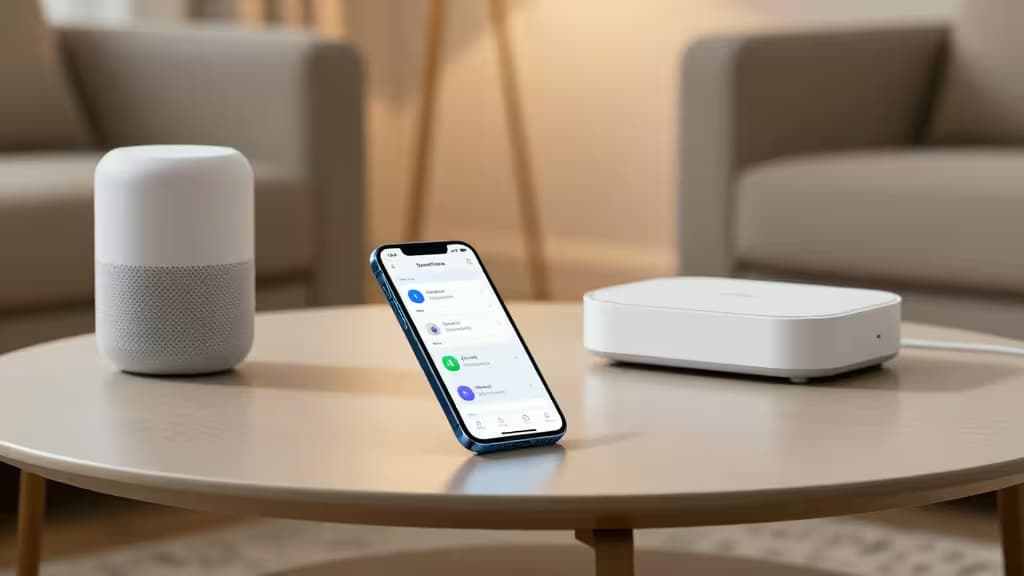
Samsung SmartThings has quietly become one of the most versatile smart home platforms on the market. It speaks Zigbee, Z-Wave, Thread, and now Matter — which means it can tie together devices that would otherwise live in separate apps. But the platform is only as good as the hardware you connect to it. Pick the wrong hub, switch, or sensor and you're stuck with flaky connections, cloud-only control, or — worst case — a device that simply won't pair.
We've spent time with dozens of SmartThings-compatible devices, digging through community forums, verified compatibility docs, and hands-on testing. These are the things actually worth buying for a stable, future-proof SmartThings home.
The Best SmartThings Hub: Aqara Hub M3
If you're building a SmartThings system, the hub you choose sets the foundation. The Aqara Hub M3 is our top pick because it bridges Matter, Zigbee, and Thread into a single unit that talks directly to SmartThings without cloud intermediaries.1
The M3 acts as a Matter bridge for all Aqara sensors and devices, meaning they appear natively in the SmartThings app — no extra accounts, no flaky cloud-to-cloud handshakes. It's the cleanest integration path for one of the largest ecosystems of affordable Zigbee sensors on the market.1 For anyone starting fresh or expanding an existing Aqara setup, this is the hub that makes everything just work.
The Best Smart Lighting: Lutron Caseta
Smart lighting is the category where reliability matters most — a light that won't turn on is a light you'll never trust again. Lutron Caseta has earned its reputation as the gold standard here, and its integration with SmartThings is rock-solid.2
The Caséta Smart Hub connects directly to SmartThings over the local network, giving you instant, wired-level responsiveness. Dimmer switches, plug-in dimmers, and fan controls all show up in the SmartThings app with no lag. Lutron's Clear Connect RF technology operates on its own dedicated frequency (433 MHz), so it never interferes with Wi-Fi and never suffers from the congestion that plagues other smart switches.2 It's pricier than the competition, but it's also the system that never needs troubleshooting.
The Best Smart Irrigation: Rachio 3
Outdoor automation is often an afterthought, but the Rachio 3 Smart Sprinkler Controller brings the same intelligence indoors that you expect from your interior smart home. It integrates with SmartThings natively, allowing you to trigger sprinkler schedules from routines, arm/disarm scenes, or even tie watering to weather alerts.3
The Rachio 3 uses hyper-local weather data to skip watering when rain is forecast and adjusts run times based on temperature, soil type, and plant zone. It also supports Apple HomeKit, Google Home, and Alexa alongside SmartThings, so it plays nice in multi-platform homes.3 For anyone who wants their lawn to be as smart as their living room, this is the pick.
The Best Voice Control: Amazon Echo (4th Gen)
Voice assistants are the most natural interface for smart home control, and the Amazon Echo (4th Gen) earns its spot here because it doubles as a Matter controller and Thread border router. That means it can directly control Matter-compatible devices and relay them to SmartThings without a separate hub.4
The spherical 4th Gen Echo delivers better audio than any previous Echo, with a 3-inch woofer and Dolby Atmos support. But its real value for SmartThings users is the ability to trigger routines hands-free — "Alexa, turn on movie mode" can dim the Lutron lights, arm the Aqara motion sensor, and close the shades, all routed through SmartThings. It's the voice layer that ties the whole system together.
Why These Picks
Every device here shares three qualities: reliability, ease of setup, and official or widely-tested SmartThings compatibility. We prioritized devices that communicate locally (Matter, Zigbee, or dedicated RF) over cloud-dependent alternatives, because a smart home that works when the internet is down is a smart home you can actually depend on.4
Disclosure: As with all Recomate recommendations, we may earn a commission if you buy through our links — at no extra cost to you. We only recommend devices we've verified through hands-on testing and community validation.