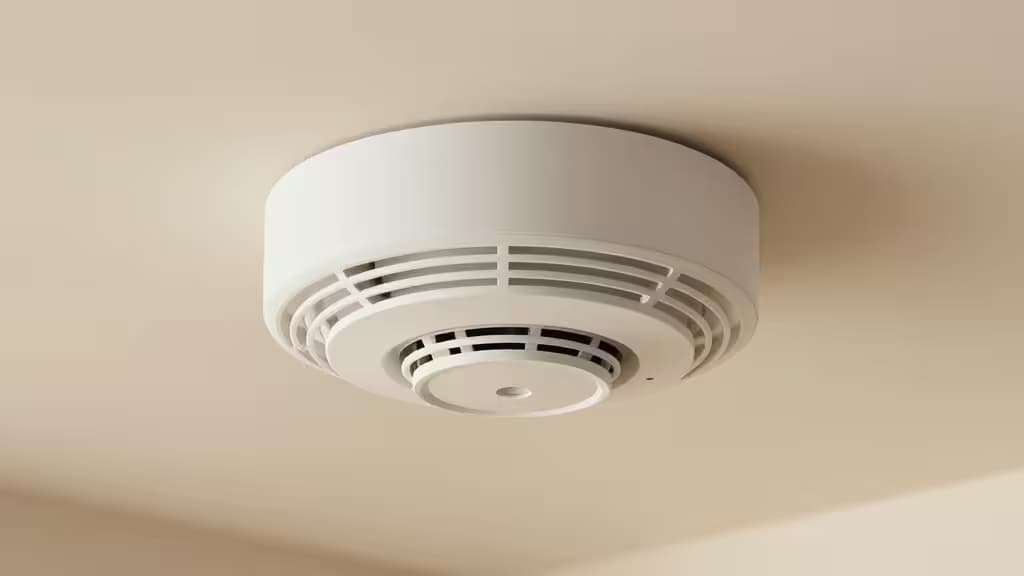
If your home still runs the original builder-grade hardwired smoke detectors, you're probably overdue for a swap. Detectors lose sensitivity over time, and the National Fire Protection Association recommends replacing all smoke alarms every 10 years4. The good news: you no longer have to choose between keeping your existing wiring and getting modern smart features.
Today's smart smoke and CO detectors are designed to drop into existing 120V hardwired circuits, adding phone alerts, self-testing, and app-based interconnect without a single new wire pulled through your ceiling. The key is matching the right detector to your home's wiring protocol, your smart-home ecosystem, and your budget.
What Matters When Replacing Hardwired Detectors
Wire compatibility. Not every smart smoke detector is hardwired-compatible. If your home has interconnected 120V alarms, your replacement needs to support the same interconnect wire protocol — typically a third wire that links all alarms so that when one triggers, they all sound. Some smart detectors use a relay module; others connect directly. Get this wrong and you'll lose the interconnect safety feature that building codes require4.
Battery backup. Hardwired detectors are required by code to include battery backup so they still function during a power outage. All the picks here include this — but it's worth confirming before you buy, especially if you're mixing brands.
Ecosystem fit. This is where smart detectors earn their premium. Phone alerts when you're away from home, voice warnings that tell you what triggered (smoke vs. CO), hush-from-your-phone instead of waving a towel, and automatic self-testing are the features that genuinely add safety value for families, rental hosts, and anyone who travels. The question is which ecosystem you already live in: Google Home, Alexa, Apple HomeKit, or Ring.
Our Picks
1. Kidde Smart Smoke + CO Alarm — Best Budget Hardwired Swap
If you want the simplest path from old dumb detectors to smart ones, the Kidde Smart Smoke + CO Alarm is the most straightforward option. It's designed as a direct hardwired replacement that connects to existing 120V interconnect wiring, so when one alarm sounds, they all do — just like your current setup1. You get smartphone alerts, combined smoke and carbon monoxide detection, and app-based silencing so you can hush a false alarm (burnt toast, we've all been there) from your phone instead of fumbling for a button on the ceiling1.
At roughly $67, it's the most affordable way to add smart alerts to a hardwired system without hiring an electrician. The trade-off: the app experience is functional but not as polished as Nest's, and there's no voice alert feature that tells you the specific hazard type.
2. Google Nest Protect (2nd Gen, Wired) — Best Smart Features
The Nest Protect remains the gold standard for smart smoke detector UX, even amid availability concerns. Its split-spectrum sensor detects both fast-flaming and slow-smoldering fires, it runs an automatic self-test that checks sensors and batteries silently, and it speaks a clear voice warning that tells you what's wrong and where2. The Pathlight feature — a soft night-light that activates when you walk under it — is a genuinely useful touch for hallways and stairwells.
It works with Google Home and Alexa, and the wired version connects to your existing 120V circuit with battery backup2. The catch: Google reportedly discontinued new direct sales of the Nest Protect in 2024, though units remain available through retailers. Check current availability before committing — and if you find one, it's still the best app experience on the market.
3. Ring Alarm (2nd Gen) with Smoke/CO Listener — Best for Existing Ring Users
If you're already invested in the Ring and Alexa ecosystem, you may not need to replace your existing hardwired detectors at all. Ring's approach uses a smoke and CO listener device that mounts near your current alarms and listens for the standard alarm tone, then sends an alert to your phone through the Ring app5. It's a clever workaround that adds smart notification without touching your wiring.
This isn't a true detector replacement — it doesn't add new sensing technology, and it won't help if your old detectors have lost sensitivity. But for homes with functional hardwired alarms and an existing Ring Alarm hub, it's the lowest-friction way to get phone alerts for fire and CO events. Pair it with a Ring Alarm professional monitoring plan and you get emergency dispatch, too.
How They Compare
| Kidde Smart | Nest Protect | Ring + Listener |
|---|
| Best for | Budget hardwired swap | Best app experience | Existing Ring homes |
| Price tier | ~$67 | ~$100+ | Listener ~$35 + hub |
| Connectivity | Hardwired 120V + app | Hardwired 120V + app | Wireless listener |
| Ecosystem | Kidde app | Google Home, Alexa |
A Note on Availability and Pricing
Pricing and availability — especially for the Nest Protect — can shift quickly. We recommend verifying current stock and prices at the retailer links above before purchasing. (Disclosure: Recomate earns affiliate commissions from qualifying purchases through the links in this article, at no additional cost to you. This doesn't influence our picks — we recommend what we'd actually install in our own homes.)
The Bottom Line
For most homeowners replacing aging hardwired detectors, the Kidde Smart Smoke + CO Alarm is the pragmatic choice: affordable, compatible with existing interconnect wiring, and it adds the smart features that matter most — phone alerts and remote hush. If you want the best app experience and can find one in stock, the Nest Protect is still the most polished smart detector available. And if you're already running a Ring security system, the Ring smoke/CO listener is a smart, low-effort upgrade that leverages what you already have.
Whatever you choose, don't wait. A 10-year-old smoke detector is a liability, not a safety device4.