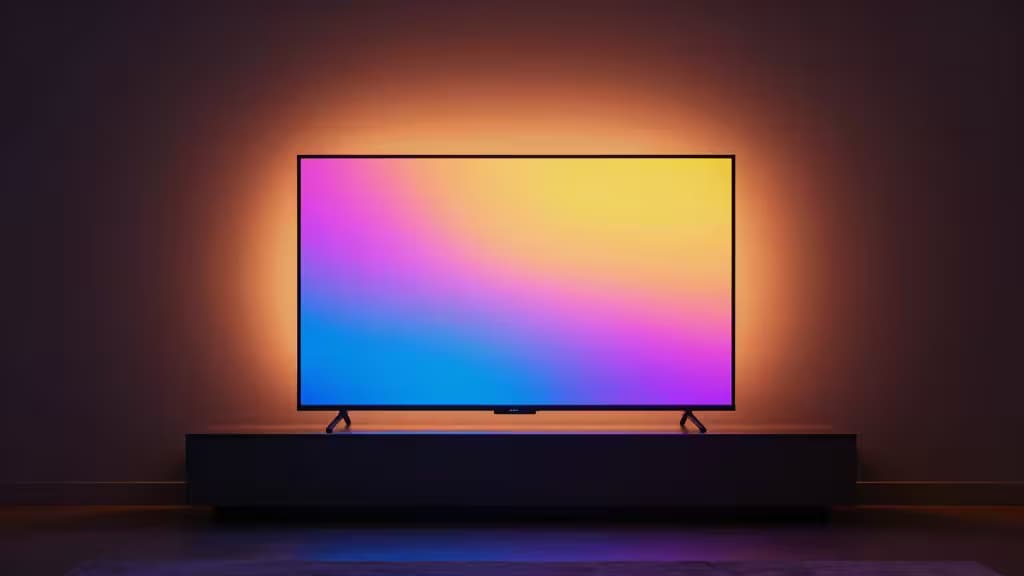
TV backlighting — often called bias lighting — does two things at once: it reduces eye strain during dark-room viewing by softening the contrast between a bright screen and a dark wall, and it adds a layer of immersion by projecting on-screen colors behind the TV. The best smart light strips range from premium HDMI-sync kits that mirror content in near-real time to budget ambient strips that deliver a simple, colorful glow.
The key buying factors come down to sync method, color accuracy, smart-home ecosystem fit, and price. HDMI passthrough boxes read the actual video signal and reproduce colors with minimal lag, making them the gold standard for content-synced backlighting. Camera-based systems offer a similar effect at a lower cost by analyzing the screen from the outside, though they introduce a slight delay and raise privacy considerations. Strips with no content sync at all still provide excellent bias lighting for eye comfort — they just won't react to what's on screen.
Here's how the top options stack up, and which one is right for you.
1. Philips Hue Play HDMI Sync Box + Gradient Lightstrip — Best Overall
If you want the most accurate, lag-free content-synced backlighting available, this is the kit. The HDMI Sync Box sits between your video sources and the TV, reading the actual signal and driving the Gradient Lightstrip to match on-screen colors in real time. There's no camera involved, which means no delay from image analysis and no privacy concerns — the box processes the HDMI feed directly.1
The Gradient Lightstrip itself uses multiple color zones along a single strip, producing smooth color transitions rather than the blocky segments you get from cheaper RGB strips. Color accuracy is best-in-class, and the entire setup lives inside the Philips Hue ecosystem, meaning full HomeKit, Alexa, and Google Home integration.1
The trade-off is price. The Sync Box + Gradient Lightstrip kit runs around $448, making it the most expensive option here by a wide margin.1 But if you're already invested in Hue — or you plan to be — and you want immersive, frame-accurate bias lighting, nothing else matches it.
Verdict: The gold standard for content-synced TV backlighting, if your budget allows.
2. Nanoleaf 4D Screen Mirror + Lightstrip Kit — Best Mid-Range
The Nanoleaf 4D takes a different approach: instead of an HDMI box, it uses a small camera that mounts on or near your TV to mirror on-screen colors onto a trimmable RGBIC gradient lightstrip. The result is content-reactive backlighting at a fraction of the Hue Sync Box price.2
A few details set it apart. The camera includes a privacy cover, addressing the most common concern with camera-based systems. The lightstrip is trimmable to fit your TV size, and the RGBIC architecture allows multiple colors to display simultaneously along the strip — something basic RGB strips can't do.2 Smart-home support spans multiple platforms, so you're not locked into a single ecosystem.
The catch is that camera-based mirroring inherently introduces a small amount of latency compared to direct HDMI processing, and color accuracy won't match the Hue Sync Box pixel-for-pixel. For most viewers, though, the difference is subtle, and the cost savings are significant.
Verdict: The smart pick if you want screen-synced backlighting without the premium HDMI-box price tag.
3. Govee RGBIC Smart LED Backlight — Best Budget
If you don't need your lights to react to what's on screen and just want vibrant, colorful bias lighting, the Govee RGBIC Smart LED Backlight delivers a lot for the money. It uses RGBIC multi-color zones for dynamic effects, includes music sync via a built-in microphone, and ships with 99+ preset scenes accessible through the Govee app.3
USB power makes installation straightforward — the strip draws power directly from your TV's USB port, so there's no extra wall adapter to manage. The trade-off is that there's no content sync: the lights won't mirror your movie or game. They'll provide ambient glow and react to music, but not to on-screen action.3
For anyone whose primary goal is reducing eye strain with a splash of color — rather than immersive content matching — this is the value pick.
Verdict: Vibrant ambient backlighting at a budget price, as long as you don't need screen sync.
4. Philips Hue Gradient Lightstrip (Strip Only) — For Existing Hue Owners
Already running a Hue setup? The Gradient Lightstrip is available as a standalone purchase, letting you add premium bias lighting to your TV without committing to the full Sync Box kit upfront. You get the same high-quality diffusion and color accuracy, and you can pair it with the Sync Box later if you decide you want content sync.1
Even without the Sync Box, the strip works beautifully with Hue scenes — set a warm white for movie night, a cool blue for gaming, or schedule color shifts throughout the evening. Full HomeKit, Alexa, and Google Home support come standard as part of the Hue ecosystem.1
Verdict: The upgrade path for Hue loyalists who want premium backlighting on their own timeline.
5. Daybetter LED Lights — Ultra-Budget Pick
At the bottom of the price ladder, the Daybetter LED strip covers the basics: USB-powered operation, sound-reactive modes, and control via a included remote or companion app.4 There's no smart-home ecosystem integration to speak of, no content sync, and no multi-zone RGBIC — but if all you want is a simple, inexpensive glow behind the TV, it gets the job done.
Think of this as bias lighting in its most stripped-down form. It won't impress anyone who's seen a Hue Sync Box in action, but it will make a dark living room noticeably more comfortable for a fraction of the cost.4
Verdict: No-frills ambient lighting for anyone who just wants a glow without the smart-home complexity.
How to Choose
The decision really comes down to one question: do you want your lights to react to what's on screen?
- Yes, and budget is no object → Philips Hue Play HDMI Sync Box + Gradient Lightstrip. It's the only option here with true HDMI-level sync, and the color accuracy is unmatched.1
- Yes, but I want to spend less → Nanoleaf 4D. Camera-based mirroring gets you 80% of the way there for a fraction of the cost, with a privacy cover for peace of mind.2
- No, I just want colorful ambient lighting → Govee RGBIC for features and scenes, or Daybetter for the absolute lowest price.3
- I already own Hue gear → The Gradient Lightstrip on its own is a natural fit, with the option to add the Sync Box later.1
Disclosure: Recomate may earn a commission on purchases made through links on this page. This does not influence our rankings — we recommend the products we believe are genuinely worth buying.