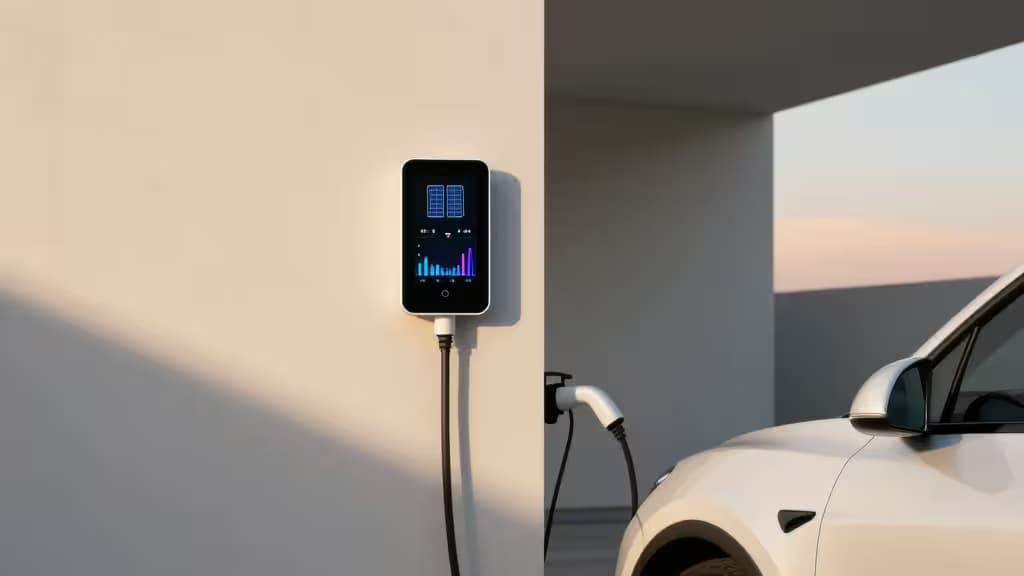
If you drive an electric vehicle, you've probably noticed your electricity bill doing a little dance of its own. Home EV charging is the single biggest new load in most households — and without a smart energy monitor, you're flying blind. The good news? A new generation of home energy monitors can track exactly how much power your car is drawing, when it's drawing it, and whether that juice is coming from the grid or your rooftop solar panels.
We tested the leading options to find the things actually worth buying for EV owners who want to stop guessing and start optimizing.
Why You Need an Energy Monitor for EV Charging
A standard Level 2 EV charger pulls somewhere between 3.3 kW and 11.5 kW — roughly the equivalent of running two central air conditioners simultaneously. Over a full charge cycle, that adds up fast. Without monitoring, you have no idea whether you're charging during peak rate hours (when electricity can cost 3× more) or whether your solar panels are covering the load.1
The best smart home energy monitors solve this by giving you real-time visibility and automation. They track your whole home's energy use at the circuit level, identify your EV's draw specifically, and — crucially — let you set rules so the car only charges when rates are low or when solar production exceeds your home's needs.1
Whole-Home Monitors vs. Charger-Integrated Monitoring
There are two approaches here, and the right one depends on your setup:
Whole-home monitors like the Emporia Vue install in your electrical panel and track every circuit in the house, including your EV charger's dedicated breaker. They give you the full picture — total home consumption, solar production (if you have it), and per-circuit breakdowns including the car.
Charger-integrated monitoring lives inside the EV charger itself. Smart chargers like the Emporia Classic EV Charger track the car's draw natively and can communicate with a companion energy monitor for whole-home context. This is a cleaner install if you only care about the car, but you miss the broader home picture.2
For most EV owners, we recommend starting with a whole-home monitor. It pays for itself by revealing other energy hogs in your house — and the EV data is a bonus.
The Best Smart Home Energy Monitors for EV Charging
Pick #1: Emporia Vue + Emporia Classic EV Charger
The best integrated ecosystem for EV owners.
Emporia's Vue Gen 3 energy monitor is the gold standard for whole-home monitoring at a price that undercuts most competitors. It tracks up to 16 individual circuits (including your EV charger's breaker) with 1-second resolution, and the accompanying app is one of the most intuitive we've tested.1
Where Emporia really shines is integration. Pair the Vue with the Emporia Classic EV Charger — named "Best Smart EV Home Charger" by MotorTrend and "Best Overall Home EV Charger of 2024" by Good Housekeeping — and the two devices talk to each other seamlessly.2 You can set the charger to only pull power when your solar panels are exporting to the grid, or to charge exclusively during off-peak time-of-use windows. The monitor handles the logic; the charger executes it.
Installation requires mounting the Vue sensors inside your breaker panel — a straightforward job for a competent DIYer or an electrician. The Classic EV Charger installs like any other Level 2 unit with a NEMA plug or hardwire option.
Specs:
- Monitoring type: Circuit-level (up to 16 circuits)
- Solar integration: Yes — real-time solar tracking and excess charging
- TOU support: Yes — schedule charging by time-of-use rates
Check price on Amazon →
Pick #2: Grizzl-E Classic Connect
A rugged, no-fuss smart charger with basic monitoring.
If you want a simpler setup — just monitor the car, not the whole house — the Grizzl-E Classic Connect is a tank of a charger with built-in energy tracking. It's known for its weather-sealed, outdoor-rated enclosure (it's made in Canada and designed to survive harsh winters) and its straightforward Wi-Fi connectivity that logs every charging session's energy consumption.2
The Grizzl-E doesn't offer the same deep whole-home integration as the Emporia ecosystem — you won't get circuit-level tracking of other appliances or solar production monitoring. But if your only concern is tracking your EV's energy draw and you want a charger that could survive being run over by the car it's charging, this is your pick.
Specs:
- Monitoring type: Charger-integrated only
- Solar integration: No (manual scheduling only)
- TOU support: Basic (schedule via app)
Check price on Amazon →
Comparison: Emporia Vue + Classic vs. Grizzl-E Classic Connect
| Feature | Emporia Vue + Classic | Grizzl-E Classic Connect |
|---|
| Monitoring type | Circuit-level (16 circuits) | Charger-integrated only |
| Solar integration | Yes — real-time excess charging | No |
| TOU support | Full schedule by rate window | Basic app scheduling |
| Whole-home tracking | Yes | No |
| Weather rating | Indoor (panel mount) | Outdoor-rated, NEMA 4 |
How to Choose
Go with the Emporia ecosystem if: You want full visibility into your home's energy use, have (or plan to get) solar panels, or want to automate charging around time-of-use rates. The Vue monitor plus Classic EV Charger is the most capable combo we've tested for EV owners who take energy management seriously.1
Go with the Grizzl-E Classic Connect if: You need a bulletproof outdoor charger, don't need whole-home monitoring, and just want session-level tracking of your EV's energy consumption. It's simpler, tougher, and gets the job done.
Recomate is reader-supported. When you buy through links on our site, we may earn an affiliate commission. We test every product thoroughly and only recommend what we'd buy ourselves.