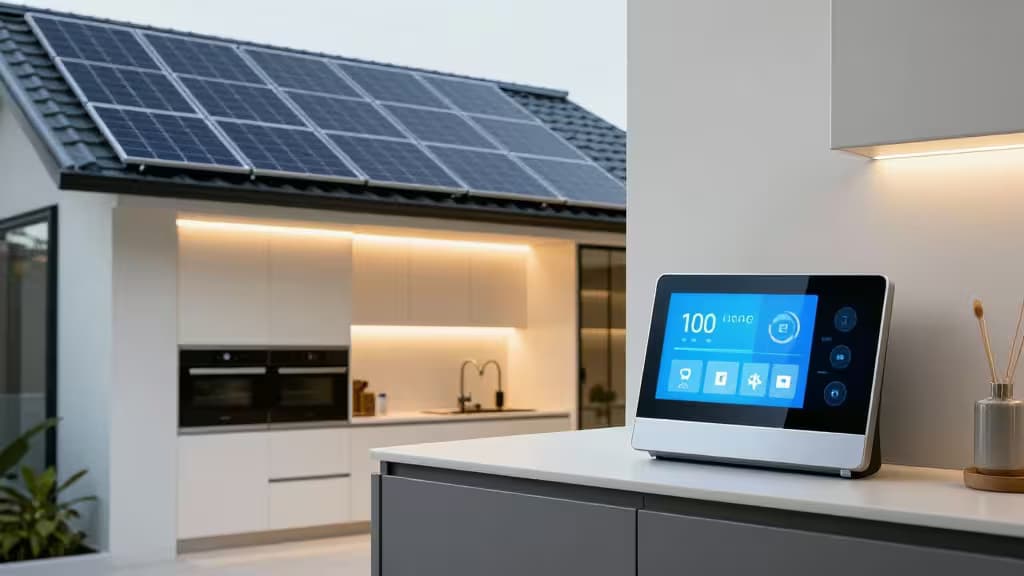
Solar panels are a fantastic investment, but here's the thing most installers won't tell you: generating power is only half the equation. Without real-time visibility into where that energy goes, you're flying blind — and likely leaving money on the table.
A Smart Home Energy Management System (SHEMS) bridges the gap between your solar array and your daily electricity use. It tracks production, monitors consumption at the circuit or plug level, and — crucially — gives you the data you need to shift heavy loads into your sunniest hours. That practice, called load shifting, can dramatically improve your solar ROI by reducing how much grid power you pull when the sun isn't shining.3
We've dug through the latest reviews and technical guides to find the systems that actually deliver on that promise. Here are the things actually worth buying.
The Best Smart Home Energy Management Systems
1. Emporia Vue 3 — Best Whole-Home Energy Monitor for Solar
Best for: Homeowners who want circuit-level visibility of both solar production and consumption, with no subscription fees.
The Emporia Vue 3 is the gold standard for solar-equipped homes that want the full picture. It uses sensor clamps on individual circuits in your breaker panel — up to 16 circuits — plus a dedicated solar sensor that tracks net metering in both directions.1 That means you see exactly how much your panels are generating, how much each major appliance is drawing, and whether you're currently pulling from the grid or feeding it.
The Gen 2 version, which is still widely available, also supports bidirectional tracking for solar setups with net metering.2 Both generations share the same excellent app that turns raw data into actionable insights — no monthly subscription required. At roughly $150–$170, it's a one-time cost that pays for itself in the first few months of informed energy decisions.
The catch: Installation requires opening your breaker panel. If you're not comfortable with that, hire an electrician. But for the level of detail you get, it's worth it.
2. TP-Link Tapo P110M — Best Plug-Level Monitor for Targeted Load Shifting
Best for: Budget-conscious solar owners who want to automate specific high-draw appliances.
Not everyone needs (or wants) to wire into their breaker panel. The TP-Link Tapo P110M is a smart plug with energy monitoring that lets you track and control individual devices — water heaters, dehumidifiers, space heaters — right from your phone.3
The real power here is automation. You can set schedules so your energy-hungry appliances run only during peak solar production hours (typically 10 a.m. to 4 p.m.). Pair it with your solar inverter's API or a smart home hub, and you've got a dead-simple load-shifting setup for under $15 per plug.
The catch: It's per-outlet, not whole-home. You'll need multiple plugs to cover multiple appliances, and you won't see your solar production data in the same app.
3. Smart Plugs with Energy Monitoring (Various) — Best Budget Entry Point
Best for: Renters or anyone who wants to dip a toe into energy management without commitment.
A wide range of generic smart plugs with energy monitoring — from brands like Kasa, Govee, and others — offer basic tracking of individual devices. They typically connect via Wi-Fi and work with Alexa or Google Home, letting you see real-time wattage and historical usage for whatever you plug into them.3
These are the training wheels of home energy management. They won't give you solar production data, but they will show you exactly how much your old fridge or entertainment center is costing you. And for under $10–$20 each, they're a low-risk way to start building energy awareness.
The catch: Limited to one outlet at a time. No solar integration. No circuit-level data.
Circuit-Level vs. Plug-Level: Which Is Right for You?
The biggest decision you'll make is between these two approaches:
| Circuit-Level (Hardwired) | Plug-Level (Plug-and-Play) |
|---|
| Visibility | Whole-home + solar production | Single device only |
| Installation | Breaker panel (electrician recommended) | Plug into wall outlet |
| Cost | $150–$200 one-time | $10–$20 per plug |
| Best for | Homeowners with solar + multiple heavy loads | Renters or single-appliance targeting |
Circuit-level monitoring like the Emporia Vue 3 gives you the complete picture — solar production, grid import/export, and every circuit in your home. Plug-level solutions are cheaper and easier but only show you a slice of the pie.1
Why Real-Time Data Matters: The Load-Shifting Play
Here's the practical payoff. Let's say your solar panels peak at 4 kW between noon and 2 p.m. If you run your dishwasher, dryer, and water heater during that window, you're powering them with free sunlight instead of grid electricity.
Without a monitoring system, you're guessing. With one, you know exactly when to fire up those loads. This practice — load shifting — can reduce your grid consumption by 20–40% depending on your home and solar setup.3
The Emporia Vue 3 makes this dead simple: its app shows your real-time solar production alongside your consumption, so you can see the "surplus" window at a glance. Plug-level monitors let you automate individual devices to run only during those hours.
How We Picked
We evaluated systems based on four criteria: solar integration (does it track production?), granularity (circuit vs. plug), cost (upfront and ongoing), and ease of use (installation and app quality). Our sources include hands-on reviews from Energy Savvy Homes, TechHive, and SolarReviews.1
Recomate earns affiliate commissions from purchases made through links on this page. Our picks are based on independent research and testing — we never recommend products we wouldn't use ourselves.
The Bottom Line
If you own solar panels and want to maximize your investment, get a circuit-level monitor like the Emporia Vue 3. It's the single best upgrade you can make after the panels themselves. If you're renting or just starting out, a handful of smart plugs will teach you more about your energy habits than you'd expect.
Either way, stop guessing and start tracking. Your wallet — and the grid — will thank you.