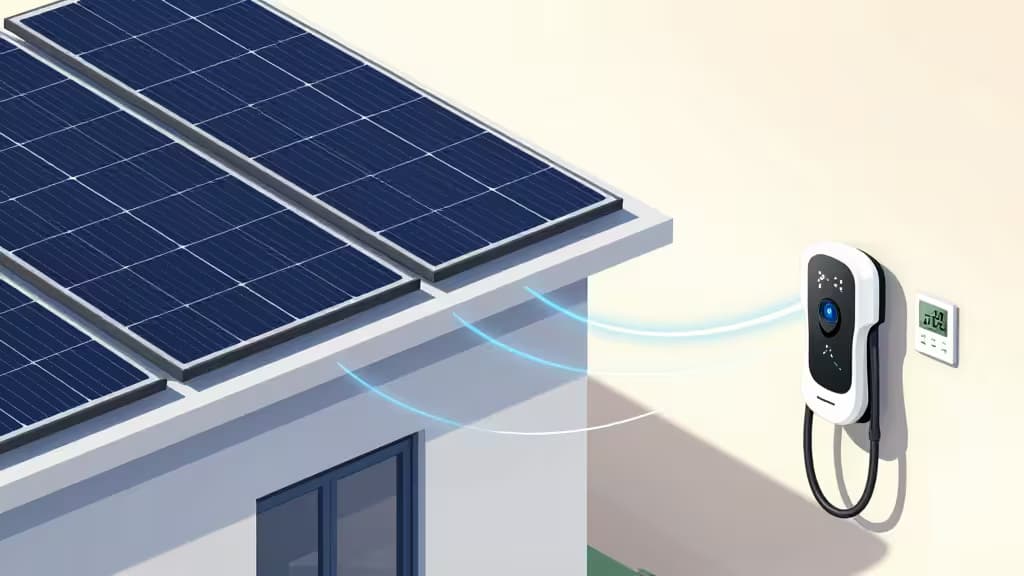
Solar panels only save money if you manage the energy they produce. A smart home energy management system (HEMS) tracks generation, consumption, and storage in real time, automating loads to shift usage to peak solar hours. This guide covers the best systems for solar households—from whole-home monitors to EV chargers with solar load balancing and smart thermostats that optimize HVAC around production.
Why a layered approach matters
No single device manages your solar energy ecosystem alone. The most effective strategy layers three functions: monitor generation so you know what your panels produce, shift consumption to match peak production, and automate the biggest loads so nothing goes to waste. The picks below cover each layer.
Our picks
1. SolarEdge mySolarEdge — Top pick for SolarEdge inverter owners
SolarEdge's monitoring platform is the most comprehensive option on this list, but it requires SolarEdge hardware (power optimizers and inverter) to function. If you already have—or plan to install—a SolarEdge system, the mySolarEdge app gives you panel-level performance tracking, battery storage integration, and EV charger management from a single dashboard.2
That panel-level granularity matters: when one panel underperforms due to shade, debris, or degradation, SolarEdge's optimizer-based architecture lets you identify the exact module rather than guessing from whole-system output. For solar households, this is the closest thing to a true HEMS—provided you're in the SolarEdge ecosystem.
2. Emporia Pro Level 2 EV Charger — Best for solar-powered EV charging
The Emporia Pro bundles a Level 2 EV charger with the Emporia Vue whole-home energy monitor, enabling dynamic load balancing that prevents electrical overloads by adjusting charging speed based on real-time home consumption.1 For solar households, that means you can set charging to ramp up when your panels are producing excess energy and throttle back when household demand spikes.
At $599, it's not the cheapest charger on the market, but the included Vue monitor makes it a two-in-one: you get EV charging and whole-home energy monitoring in a single purchase.1
3. Emporia Classic — Budget smart charger with energy tracking
The Emporia Classic delivers Wi-Fi-connected smart charging with detailed energy tracking and scheduling via the Emporia app, available in both J1772 and NACS connector options.3 At $429, it's the most accessible entry point for solar households that want to time EV charging around solar production without paying for the Pro's dynamic load balancing.3
You lose the whole-home Vue monitor, but if your electrical panel has headroom and you don't need active load balancing, the Classic's scheduling features are enough to shift charging into peak solar hours.
4. Grizzl-E Classic Connect — Rugged outdoor charger with Wi-Fi scheduling
The Grizzl-E Classic Connect is a Canadian-made charger built for harsh environments, combining heavy-duty construction with Wi-Fi connectivity for scheduling and remote control.4 If your charger lives outside in extreme weather, the Grizzl-E's reputation for durability sets it apart from lighter-duty options.
It lacks the integrated energy monitoring of the Emporia chargers, but for solar households that already have generation monitoring via SolarEdge or another platform and just need a tough, schedulable charger, the Grizzl-E fills that role reliably.
5. Google Nest Learning Thermostat (4th Gen) — Best smart thermostat for solar households
HVAC is the largest single load in most homes, which makes it the most impactful target for solar energy optimization. The Nest Learning Thermostat (4th Gen) learns your habits over time and works with Nest Temperature Sensors to manage comfort in specific zones.5 It supports the Matter protocol for broad smart-home interoperability and carries an Energy Star certification.5
For solar households, the Nest's adaptive scheduling means your HVAC can pre-cool or pre-heat during peak solar production hours, storing thermal comfort in your home's thermal mass rather than drawing from the grid after sunset.
How they work together
The most effective solar energy management strategy uses these products in layers:
- Monitor generation — SolarEdge tracks panel-by-panel output so you know exactly what you're producing.2
- Shift EV charging — Emporia Pro (or Classic) schedules charging to match solar peaks, with the Pro adding dynamic load balancing for households with tighter electrical capacity.1
- Automate HVAC — The Nest Learning Thermostat optimizes your largest load around production patterns, pre-conditioning during solar peaks.5
Not every household needs all five products. If you already have a SolarEdge inverter, start there. If you drive an EV, the Emporia Pro is the best single purchase for solar-aware charging. And if you want to tackle the biggest energy consumer in your home, the Nest thermostat is the simplest, most proven tool for the job.
Recomate may earn a commission when you purchase through links on this page. We evaluate products independently and only recommend those we believe are worth buying.