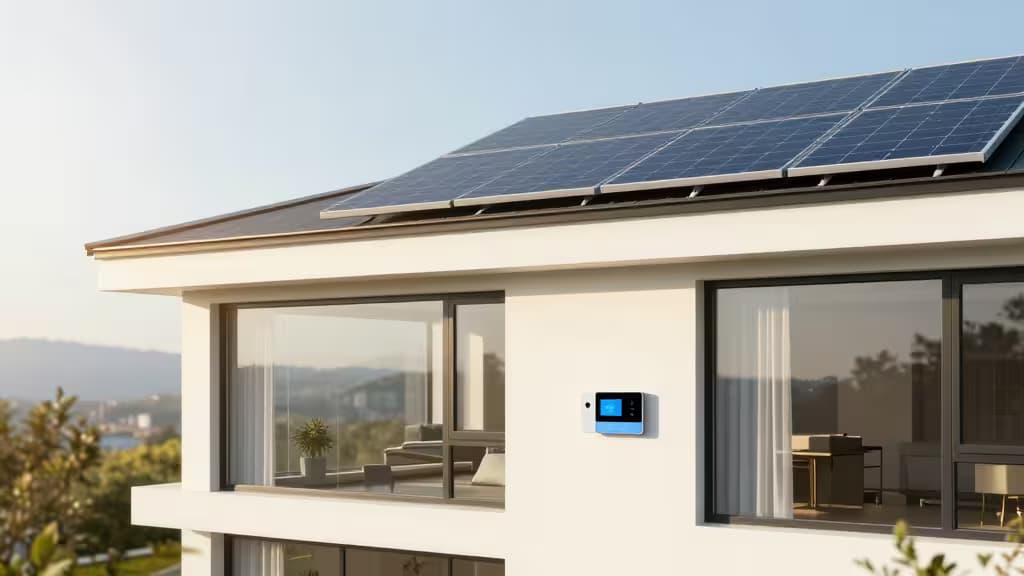
Solar panels only save you money if you actually use the energy they produce. That sounds obvious, but many solar households export surplus electricity back to the grid during peak production hours—often at a fraction of what they pay when drawing power back in the evening. The fix isn't more panels; it's smarter consumption.
The right smart home devices help you shift energy-intensive tasks into the 10am–3pm window when your panels are producing the most. The U.S. Department of Energy emphasizes maximizing self-consumption of solar-generated electricity as a key strategy for solar households6. By scheduling EV charging, irrigation, and outdoor power loads to coincide with peak production, you use more of what you generate and buy less from the grid.
This guide covers five devices that tackle the three biggest shiftable loads in a solar home—EV charging, irrigation, and outdoor power—plus a central hub to tie it all together.
How We Chose
We focused on devices that meet three criteria for solar owners:
- Flexible scheduling — the ability to align operation with peak solar production hours
- Energy monitoring — visibility into how much power you're using and when
- Automation compatibility — integration with smart home routines that can trigger devices based on conditions like time of day or energy production
Every pick below addresses at least one of these criteria, and the best ones hit all three.
Disclosure: Recomate earns affiliate commissions on purchases made through links in this guide. This does not influence our recommendations.
1. Emporia Classic EV Charger — Top Pick
EV charging is the single largest shiftable load in most solar homes. A typical electric vehicle draws 7–11 kW while charging, which means a single session can consume more energy than the rest of your house uses in a day. If you charge at night, you're pulling from the grid. If you charge during peak solar hours, you're running on sunlight.
The Emporia Classic EV Charger is built for exactly this scenario. At $429, it's an affordable Level 2 smart charger available in both NACS and J1772 connector options1. The Emporia app lets you schedule charging sessions to align with your panels' peak production window, and built-in energy tracking shows you exactly how much power your EV is drawing and when1.
For solar owners, the combination of scheduling and real-time energy monitoring is what makes this our top pick. You can see your self-consumption in action: charge the car at noon, watch the charger pull from your solar surplus, and confirm you're not drawing from the grid. That feedback loop is invaluable for optimizing your solar setup.
2. Grizzl-E Classic Connect — Budget EV Charger
If the Emporia is out of reach or you want a charger that can take a beating outdoors, the Grizzl-E Classic Connect is the rugged alternative. Canadian-made and weather-proof, it's designed for permanent outdoor installation in harsh conditions2.
The Connect variant adds Wi-Fi scheduling, so you can set charging times to coincide with your solar production peaks just like the Emporia2. While it lacks the Emporia's granular energy monitoring, it makes up for it with exceptional durability and a lower price point. If your charger lives outside in snow, rain, or direct sun, the Grizzl-E is built to handle it.
For solar owners who want a no-nonsense outdoor charger aligned to solar production without paying for features they won't use, this is the budget pick.
3. Rachio 3 Smart Sprinkler Controller
Irrigation pumps are a significant energy draw, and they're perfectly suited to midday scheduling—your lawn doesn't care whether it's watered at noon or at dawn. The Rachio 3 Smart Sprinkler Controller lets you schedule watering to run during peak solar hours, shifting that load onto your panels' output.
What sets the Rachio apart is Weather Intelligence Plus, which adjusts watering based on hyper-local rain, wind, and freeze data3. On rainy days—when your solar output is already low—the Rachio skips watering automatically, which means you're not running pumps when you have little solar to spare. It's a natural fit for solar-aligned scheduling.
The Rachio 3 is also EPA WaterSense certified, which may qualify you for local water utility rebates3. That's a rare case where a smart home device pays you back twice: once in energy savings from solar alignment, and again through water conservation incentives.
4. Google Nest Hub Max — Automation Hub
The devices above are powerful on their own, but the real magic happens when they work together. The Google Nest Hub Max serves as a central command center for coordinating solar-aware automations across your smart home4.
With Matter and Thread support, the Nest Hub Max can communicate with a wide range of smart devices4. You can create Google Routines that trigger multiple devices when solar production is high: start the EV charger, run the sprinklers, and power on outdoor plugs—all from a single automation. The built-in smart display lets you monitor everything at a glance, and voice control means you can adjust schedules hands-free.
This isn't a device that directly saves energy. It's the device that makes your other solar-aware devices work together as a system. If you're building a solar-aligned smart home, a central hub is the glue.
5. Kasa Outdoor Smart Plug KP401 — Outdoor Loads
Not every shiftable load has a dedicated smart device. Pool pumps, fountains, landscape lighting, and other outdoor equipment often run on simple timers—or no timer at all. The Kasa Outdoor Smart Plug KP401 bridges that gap.
Rated at 15A, the KP401 can handle heavy-duty outdoor loads5. Its IP64 weatherproof rating means it can live outside year-round5. Through the Kasa app, you can schedule any plugged-in device to run during peak solar hours and turn it off when production drops. Set your pool pump to run from 11am to 2pm, your fountain to cycle during midday, and your landscape lighting to wait until dusk.
At its price point, the KP401 is one of the cheapest ways to solar-align an outdoor load. Buy a few, plug in your biggest energy hogs, and schedule them to run when your panels are producing.
How to Build a Solar-Aware Smart Home
The strategy is simple: identify your largest energy loads, then schedule them to run between 10am and 3pm when your panels produce the most. The Department of Energy recommends maximizing self-consumption of solar electricity as a core strategy for solar households6.
Here's a typical solar-aligned schedule:
| Time | Device | Action |
|---|
| 10:00 AM | EV Charger | Begin charging |
| 11:00 AM | Pool pump (via Kasa plug) | Turn on |
| 12:00 PM | Rachio sprinklers | Run irrigation cycle |
| 2:00 PM | Pool pump | Turn off |
| 3:00 PM | EV Charger | End charging window |
Use a hub like the Nest Hub Max to coordinate these schedules and create routines that trigger automatically. The goal is to shift as much consumption as possible into the solar production window, so you're using the energy your panels generate instead of selling it cheap and buying it back at a premium.
Start with the biggest load—usually EV charging—and work your way down. Every kilowatt-hour you shift to peak solar hours is a kilowatt-hour you don't buy from the grid.