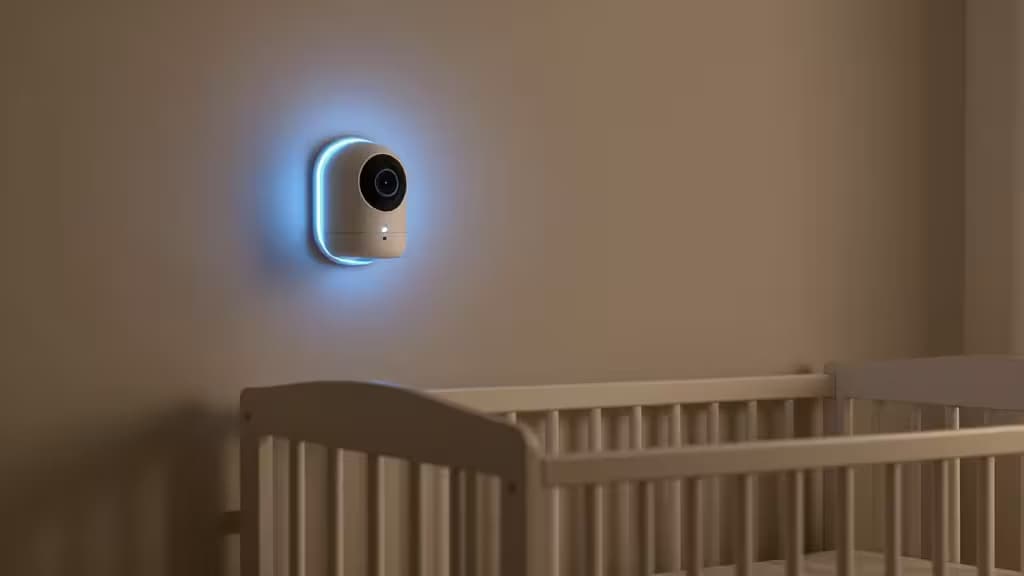
There are two kinds of parents in the baby-monitoring world, and the camera you pick depends entirely on which one you are.
Data Parents want numbers. They want to know how long the baby slept, how many times they stirred, whether their breathing pattern changed overnight. They want sleep scores, breathing motion tracking, and temperature trends — and they're willing to pay a premium for it.
Just Show Me the Baby Parents want a clear, reliable video feed. They want to check in, see the baby, hear the baby, and get back to their coffee. They don't need a weekly sleep report — they need a camera that works every time, without fuss.
Both are valid. Both have excellent options. The trick is knowing which camp you're in before you spend $300 on a monitor you'll never use to its full potential.
Here's our guide to the best smart cameras for baby monitoring, split by philosophy.
Top Dedicated Smart Baby Monitors
These are purpose-built for nurseries. They do things no general-purpose security camera can — breathing tracking, sleep analytics, and FDA-cleared health monitoring.
1. Nanit Pro — Best Overall for Data Parents
The Nanit Pro is the gold standard for parents who want data. It delivers 1080p HD video with a wide-angle lens that covers the entire crib, plus breathing motion tracking via a patterned swaddle or band that the camera's computer vision analyzes all night.1
What sets Nanit apart is the Sleep Insights dashboard. Every morning you get a breakdown of total sleep, time to fall asleep, night wakings, and a sleep score. Over time, it learns your baby's patterns and offers personalized tips. It also integrates with Alexa for hands-free check-ins.1
The trade-off: it's expensive, and the subscription ($5–$10/month) unlocks the full analytics suite. If you won't use the data, you're paying for features you don't need.
2. Owlet Dream Duo — Best for Health-Conscious Parents
Owlet takes a different approach: FDA-cleared vital monitoring. The Dream Duo pairs a camera with a baby sock that tracks heart rate and oxygen levels. It's the only consumer baby monitor with medical-grade health tracking, and for parents of newborns with health concerns, that peace of mind is invaluable.2
The camera itself is solid — 1080p video, two-way audio, temperature and humidity sensors — but the real value is in the sock integration. The app alerts you if vitals fall outside safe ranges.
The catch: the sock is an additional cost, and some parents find it causes false alarms. It's also overkill if your baby is healthy and you just want to see them on video.
3. Harbor — Best for Privacy-First Parents
Harbor is the answer to "I don't want my baby's data on someone else's cloud." It's a local-only smart monitor that processes everything on-device. No cloud subscription, no data sharing, no AI training on your infant's sleep patterns.
You get 1080p video, sound and motion alerts, temperature monitoring, and a dedicated parent unit — all without an internet connection. It's the privacy-focused alternative for parents who want smart features without the surveillance trade-off.
Top Smart Camera Alternatives (For the "Just Show Me the Baby" Crowd)
If you don't need sleep tracking or breathing monitoring, a general-purpose smart home camera can do the job for a fraction of the price. These are the best options.
4. TP-Link Tapo C120 — Best Budget Smart Camera
The Tapo C120 is a revelation at its price point. You get 2K QHD resolution (sharper than most dedicated baby monitors), color night vision, sound detection, and two-way audio — all for under $40.2
The sound detection works well for baby monitoring: the app sends notifications when noise crosses a threshold, and you can tap in to see the live feed. There's no subscription required for basic features, and local storage via microSD means no monthly fees.
What you lose: no breathing tracking, no sleep analytics, no dedicated parent unit. But if you just want to see and hear your baby clearly, this is the best value in the category.
5. Eufy Indoor Cam C120 — Best No-Subscription Option
Eufy's Indoor Cam C120 offers 2K resolution with on-device AI processing and local storage. Like the Tapo, there's no subscription required — all recordings go to a microSD card or HomeBase.2
The Eufy app is polished and reliable. You get activity zones (so you're only alerted when motion happens in the crib area), two-way audio, and compatibility with Apple HomeKit and Google Assistant. It's a set-and-forget solution for parents who want a dependable video feed without recurring costs.
The downside: no dedicated baby monitoring features like temperature sensing or lullabies. It's a security camera repurposed for nursery duty, and it works great for that — just don't expect baby-specific extras.
6. Google Nest Cam (Indoor, Wired) — Best for Google Home Households
The Nest Cam is a strong option if you're already in the Google ecosystem. It offers 1080p HDR video with intelligent alerts that distinguish people from pets and objects — useful for knowing when someone enters the nursery.2
Integration with Google Home means you can view the feed on a Nest Hub, ask Google to show the nursery on your TV, and set up routines (e.g., dim the lights when the camera detects crying).
The catch: the Nest Cam lacks continuous background audio in the Google Home app, which is a dealbreaker for many parents who want to hear the baby while doing dishes or working.2 You can open the live feed to hear audio, but it doesn't stream in the background. Also, Nest Aware subscription ($6–$12/month) is required for cloud recording and intelligent alerts.
Dedicated Monitors vs. Smart Cameras: Quick Comparison
| Feature | Dedicated Monitors (Nanit, Owlet, Harbor) | Smart Cameras (Tapo, Eufy, Nest) |
|---|
| Video Quality | 1080p HD | Up to 2K QHD |
| Breathing/Sleep Tracking | ✅ Yes | ❌ No |
| FDA-Cleared Vitals | ✅ (Owlet) | ❌ No |
| Subscription Required | Often ($5–$10/mo) | Rare (free tier available) |
| Privacy | Mixed (Harbor = local only) | Mixed (Eufy = local storage) |
How to Choose: Which Camp Are You In?
Choose a dedicated monitor (Nanit, Owlet, Harbor) if:
- You want sleep analytics and breathing tracking
- You're willing to pay for health insights
- Privacy is your top concern (Harbor)
- You want a dedicated parent unit
Choose a smart camera (Tapo, Eufy, Nest) if:
- You just want clear video and audio of your baby
- Budget is a priority
- You don't want another subscription
- You're already in a smart home ecosystem
Disclosure: As an Amazon Associate, we earn from qualifying purchases. Our recommendations are based on independent research and testing — we only recommend products we believe in, regardless of affiliate relationships.