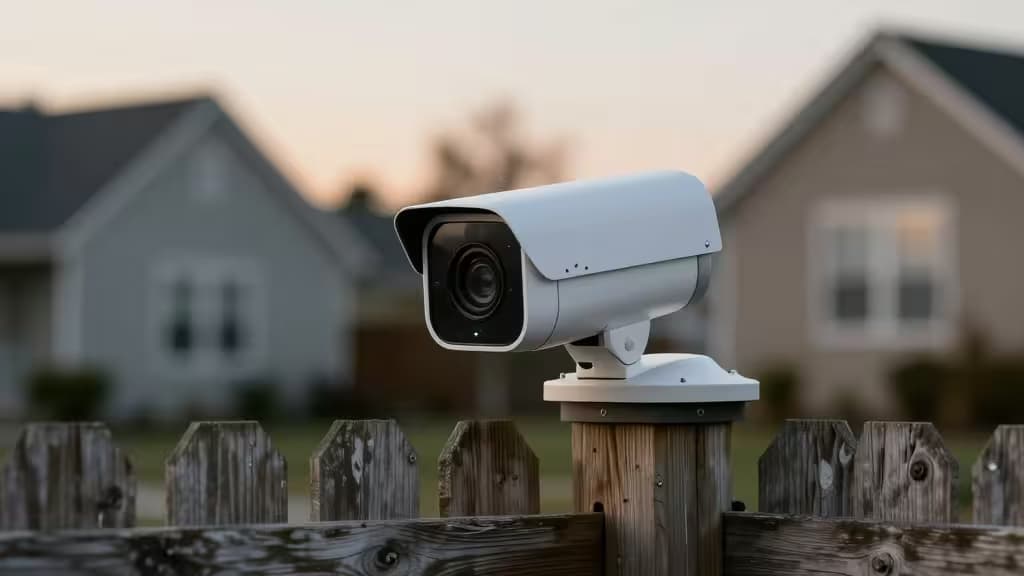
You don't need to spend $200+ for solid outdoor security. The sub-$100 category in 2026 is genuinely good — 2K resolution, weatherproofing, AI person/vehicle detection, and local storage options are all standard fare14. The real differentiators are battery vs. wired, subscription pressure, and ecosystem fit. Here's what we found after testing the category's best budget contenders.
Recomate earns a commission on purchases through our affiliate links. That never changes our rankings — we lead with the picks we'd actually buy.
How We Evaluated
We looked at total cost of ownership — not just sticker price. A $60 camera with a mandatory $10/month subscription costs more in year one than a $90 camera with free local storage. We weighed resolution, weatherproofing, AI detection quality, storage flexibility (local vs. cloud), battery life, and smart-home ecosystem compatibility. Our sources include Wirecutter's 2026 outdoor camera testing1, SmartHomeExplorer's budget camera comparison2, CNET's cheap camera roundup3, and PCMag's tested deals guide4.
The Picks
1. TP-Link Tapo Wire-Free MagCam C425 — Best All-Rounder
Wirecutter's top cordless pick, and for good reason1. At roughly $65–75, it delivers 2K resolution, a 300-day battery life on a single charge, and AI detection that distinguishes people, vehicles, and pets1. The magnetic mount makes installation genuinely tool-free — snap it on, walk away.
What sets the MagCam apart is storage flexibility. You get free local recording via microSD card, or optional cloud at $3.50/month — the cheapest cloud plan in this tier1. It works with both Alexa and Google Home, so you're not locked into one ecosystem1. PCMag gave it an Editors' Choice4.
The tradeoff: Battery cameras can't record continuously — they're motion-triggered only. If you need 24/7 recording, look at the wired C120 below.
Verdict: The best total cost of ownership under $100. Low hardware price, cheap optional cloud, and free local storage make it the things actually worth buying in this category.
2. TP-Link Tapo C120 — Best Value (If You Have an Outlet)
At $30–40, the Tapo C120 is the cheapest outdoor camera worth buying45. PCMag called it "a full-featured 2K indoor/outdoor security camera with smart motion and sound alerts, local and cloud storage, built-in spotlights, and voice control"5 — features usually reserved for cameras twice the price.
It's wired (USB power), but that's the point: no battery to charge, no solar panel to position. You get IP66 weatherproofing, starlight color night vision, free AI person/vehicle/pet detection, and local storage via microSD5. PCMag awarded it an Editors' Choice4.
The tradeoff: You need a power outlet within reach, and the USB cable isn't designed for long outdoor runs without conduit. It's also an indoor/outdoor hybrid — not a ruggedized outdoor-only build.
Verdict: If you have an outlet, this is unbeatable value. Half the price of the MagCam with the same 2K resolution and AI detection.
3. Dragon Touch 4G LTE Solar — Best for Off-Grid / No Wi-Fi
Not every property has Wi-Fi. For remote gates, cabins, construction sites, or rural driveways, a cellular camera is the only option that works — and the Dragon Touch 4G LTE Solar fills that gap under $1004.
It pairs a solar panel with 4G LTE connectivity, so you never need to run power or Wi-Fi. IP66 weatherproofing handles the elements. The solar panel means no battery swaps once it's set up — true set-and-forget for locations where you'd otherwise have nothing.
The tradeoff: You'll need a SIM card and data plan (typically $10–15/month), which adds to the total cost. Image quality and app polish trail the TP-Link options. This is a niche pick — buy it only if you genuinely lack Wi-Fi.
Verdict: The right tool for a specific job. If your camera location has no Wi-Fi and no power, this is your most affordable option.
What About Blink and Arlo?
The Blink Outdoor 4 is a strong contender — SmartHomeExplorer and Security.org both highlight its 2-year AA battery life and local storage via the Sync Module 226. At $60–85, it's the maintenance-free choice if you never want to charge a battery4. The catch: local storage requires buying the Sync Module 2 separately, and the ecosystem is Alexa-only.
The Arlo Essential Outdoor (around $50–70 on sale) offers the best motion filtering in this tier with a built-in spotlight and cross-ecosystem support (Alexa, Google, Apple-friendly)23. The tradeoff is subscription pressure — Arlo's cloud plans are pricier than TP-Link's, and the free tier is limited.
Both are excellent cameras. We gave the edge to the Tapo picks for lower total cost of ownership, but Blink and Arlo remain strong alternatives depending on your priorities.
The Bottom Line
For most buyers, the TP-Link Tapo MagCam C425 is the best outdoor security camera under $100 — it balances price, features, and storage flexibility better than anything else in this tier1. If you have a power outlet, the Tapo C120 at $30 is the value play of the year45. And if you're off-grid, the Dragon Touch 4G LTE Solar gets you covered where Wi-Fi can't reach.