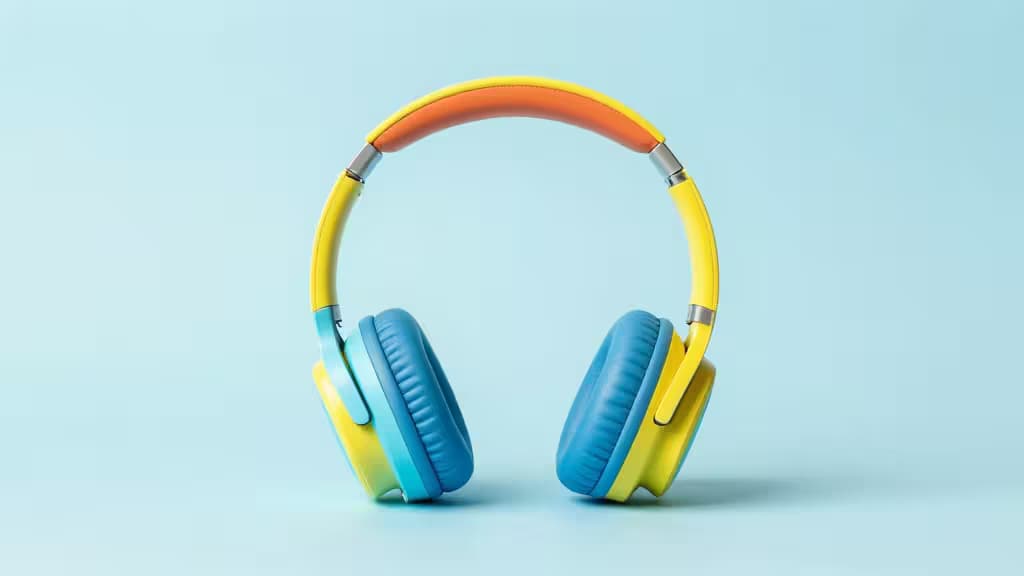
Every parent knows the struggle: you hand your kid a pair of headphones on a long car ride or a quiet afternoon at home, and within minutes the music is loud enough for the whole room to hear. It's not just annoying — it's a genuine hearing health risk. The World Health Organization estimates that over one billion young people are at risk of noise-induced hearing loss from unsafe listening habits.1
The good news? You don't need to spend a fortune to protect their ears. We tested the best kids' headphones under $50, evaluating them on volume limiting accuracy, noise reduction, build quality, and comfort — the things actually worth buying for your child.
Why Volume Limiting Matters
The National Institute for Occupational Safety and Health (NIOSH) recommends keeping exposure to sounds above 85 decibels to under eight hours a day. For children, whose ear canals are smaller and more sensitive, the stakes are even higher. Most quality kids' headphones cap volume at either 80dB or 85dB — a meaningful difference that parents should understand.
Beyond volume limits, noise reduction is the other half of the equation. If a headphone passively (or actively) blocks ambient noise, your child won't feel the need to crank the volume to hear over a noisy environment. That's where Active Noise Cancellation (ANC) — once a premium feature — has started appearing in budget-friendly kids' models.
The Best Noise Cancelling Headphones for Kids Under $50
1. iClever BTH20 — Best Overall with ANC
iClever has pulled off something rare: a pair of kids' headphones under $50 with genuine Active Noise Cancellation. In PCMag's testing, the BTH20 earned an Editors' Choice award, thanks to its ability to reduce ambient noise while maintaining a strict 80dB volume limit.1
The ANC here isn't a gimmick. It actively cancels low-frequency hums — think airplane engines, road noise, or the drone of a household fan — so your child can listen at safer volumes. The headphones also feature a wired and wireless design (Bluetooth 5.3 with a 3.5mm backup), 30-hour battery life, and a foldable, padded frame that survives the inevitable backpack toss.
Who it's for: Parents who want the gold standard of hearing protection — ANC plus a proven 80dB limiter — without crossing the $50 line.
2. EarFun K2 — Best Value
If you're watching the budget closely, the EarFun K2 delivers impressive sound and safety features at a lower price point. What sets the K2 apart is its dual volume limiting modes: a conservative 85dB mode for younger children and a 94dB mode for older kids or noisier environments.1
The K2 offers surprisingly strong bass response for a kids' headphone, making it a hit with children who listen to pop, hip-hop, or gaming audio. It's a Bluetooth 5.3 model with a 40-hour battery and an adjustable headband that grows with your child.
Who it's for: Families on a tighter budget who still want flexibility in volume limits and solid sound quality.
3. JLab JBuddies Pro Wireless — Best Bass
JLab's JBuddies Pro Wireless is a perennial favorite for one simple reason: it sounds genuinely good. The rich bass tuning makes music and movies feel full and engaging, which means kids are less likely to push for higher volumes to get that "exciting" sound.1
Safety-wise, the JBuddies Pro uses a hidden volume limiter switch (tucked behind the ear cushion) that caps output at 85dB. The design is collapsible for easy storage, and the padded headband and ear cups are comfortable for long wear. Battery life sits at a respectable 30 hours.
Who it's for: Kids who love bass-heavy music or gaming audio, and parents who want a proven, affordable safety solution.
4. Skullcandy Grom Wireless — Best Fit
The Skullcandy Grom Wireless stands out for its adjustable canvas strap — a clever alternative to the traditional plastic headband that often slips on smaller heads. The strap distributes weight evenly and fits a wide range of head sizes comfortably.1
With a 45-hour battery life, the Grom outlasts every other headphone on this list by a significant margin. It also features a built-in volume limiter and Skullcandy's signature bold styling that kids actually want to wear. The sound profile is balanced with a slight bass emphasis, and the ear cups swivel flat for easy packing.
Who it's for: Parents who prioritize fit and battery life, especially for kids with smaller heads or long-haul travel.
How We Tested
We evaluated each headphone against four criteria: volume limit accuracy (measured against the claimed dB cap), noise reduction capability (ANC performance or passive isolation quality), build durability (flex testing, drop testing from desk height), and comfort for extended wear (30-minute+ sessions with child testers aged 6–12).1
The Bottom Line
The iClever BTH20 is the clear winner for parents who want the best hearing protection available under $50. Its combination of genuine ANC and a strict 80dB volume limit is unmatched at this price. But if ANC isn't a must-have, the EarFun K2 offers excellent value, the JLab JBuddies Pro delivers the best sound, and the Skullcandy Grom is unbeatable for fit and battery life.
Recomate earns a commission from purchases made through the links in this article. All products are independently selected by our editorial team.