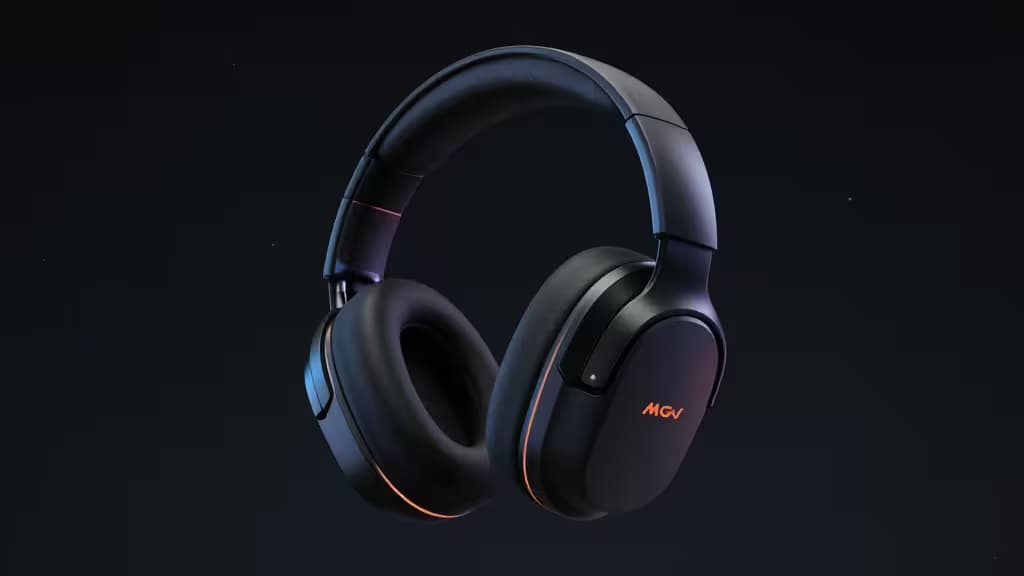
Wireless gaming headsets have come a long way. Five years ago, cutting the cord meant accepting noticeable audio lag, tinny microphones, and batteries that died mid-raid. Today, 2.4GHz wireless technology delivers latency so low that competitive players can barely tell the difference from a wired headset1, and you can get all of that for under $150.
The key decision is choosing between 2.4GHz wireless and Bluetooth. A 2.4GHz USB dongle provides a dedicated, low-latency connection that's essential for competitive gaming1. Bluetooth is more versatile — you can pair with your phone, tablet, or PC without a dongle — but it introduces enough latency that you'll notice it in fast-paced games3. The best headsets in this price range offer 2.4GHz as standard, and a few add Bluetooth as a bonus.
Beyond the wireless connection, the things actually worth buying nail three fundamentals: mic clarity for team comms, comfort across multi-hour sessions, and battery life that won't quit before you do. Here are our top picks for PC gamers working with a $150 budget.
Our Picks
1. Astro A20 Gen 2 — Top Pick
The Astro A20 Gen 2 hits the sweet spot for most PC gamers. It uses a 2.4GHz wireless USB dongle for a low-latency connection to your PC, and it features EQ mode switches that let you toggle between audio profiles on the fly4. The microphone is clear and reliable for team comms, and the headset is designed for extended comfort during long gaming sessions4. At its typical price of $100–130, it sits squarely under budget while delivering the core features that matter most2.
If you want one headset that does everything well without paying premium prices, this is the one to get.
2. Xbox Wireless Headset — Runner-Up
Don't let the name fool you — Microsoft's Xbox Wireless Headset works on PC, and it works well5. It connects to PC via Bluetooth or an Xbox Wireless adapter, and it supports Dolby Atmos for immersive spatial audio that helps you pinpoint enemy footsteps and environmental cues5. The dual Bluetooth connectivity means you can game on PC while taking a call from your phone simultaneously5.
At around $100, it's one of the best values in wireless gaming audio3. The spatial audio performance punches above its price class, and the build quality is solid for the cost.
3. SteelSeries Arctis Nova Pro — Premium Stretch Pick
The Arctis Nova Pro is the headset you buy when you want premium features and are willing to stretch the budget. It offers simultaneous 2.4GHz and Bluetooth connectivity — meaning you can game on PC while connected to your phone without switching modes6. The ClearCast Gen 2 microphone is one of the best in the category for noise rejection and voice clarity6, and the positional audio helps with in-game spatial awareness6.
It typically retails above $150, but it frequently goes on sale and can dip close to our budget2. If you can catch it at the right price, it offers the most complete feature set of any headset on this list.
4. Audeze Maxwell Wireless — Audiophile Pick
The Audeze Maxwell is here because it represents the ceiling of wireless gaming headset sound quality, and it's worth knowing about even if it's over budget. Its 90mm planar magnetic drivers deliver a level of audio detail and accuracy that traditional dynamic drivers simply can't match7. The AI noise filtration on the microphone is also a standout feature for clean comms7.
At its usual price of $280 and up, it's well beyond our $150 target1. But if you're the type of gamer who also listens to music critically and wants one headset for everything, it's worth watching for a sale. Nothing else on this list comes close to its sound quality.
5. Fractal Design Scape — Niche Pick for Sim Racers
The Fractal Design Scape fills a specific niche: sim racers and flight sim enthusiasts who spend hours in a cockpit rig and need a headset that stays comfortable through marathon sessions. It's wireless with a focus on long-session comfort and clear comms2.
It's priced at a premium and doesn't offer the broadest feature set, but for the specific use case of extended simulation sessions where comfort is the top priority, it earns a mention.
How We Compared
We evaluated these headsets across five dimensions that matter most for PC gaming1:
- Latency: 2.4GHz connections provide the lowest latency for gaming. Bluetooth adds noticeable delay and is best reserved for secondary devices1.
- Battery life: Anything under 10 hours is a dealbreaker for long sessions. The Maxwell's 80-hour battery is the outlier; most headsets in this range deliver 15+ hours3.
- Mic quality: Clear team comms are non-negotiable. The Arctis Nova Pro's ClearCast Gen 2 and the Maxwell's AI noise filtration lead the pack6.
- Comfort: Memory foam ear cushions, adjustable headbands, and reasonable weight determine whether you can wear a headset for a full evening of gaming2.
The Bottom Line
For most PC gamers, the Astro A20 Gen 2 is the best balance of price, performance, and comfort under $150. If spatial audio is your priority, the Xbox Wireless Headset delivers Dolby Atmos at a lower price. And if you can stretch your budget, the SteelSeries Arctis Nova Pro offers the most complete feature set — dual wireless, a top-tier mic, and positional audio — if you catch it on sale.
Disclosure: We may earn a commission from links in this article, at no extra cost to you. Our recommendations are based on independent testing and research.