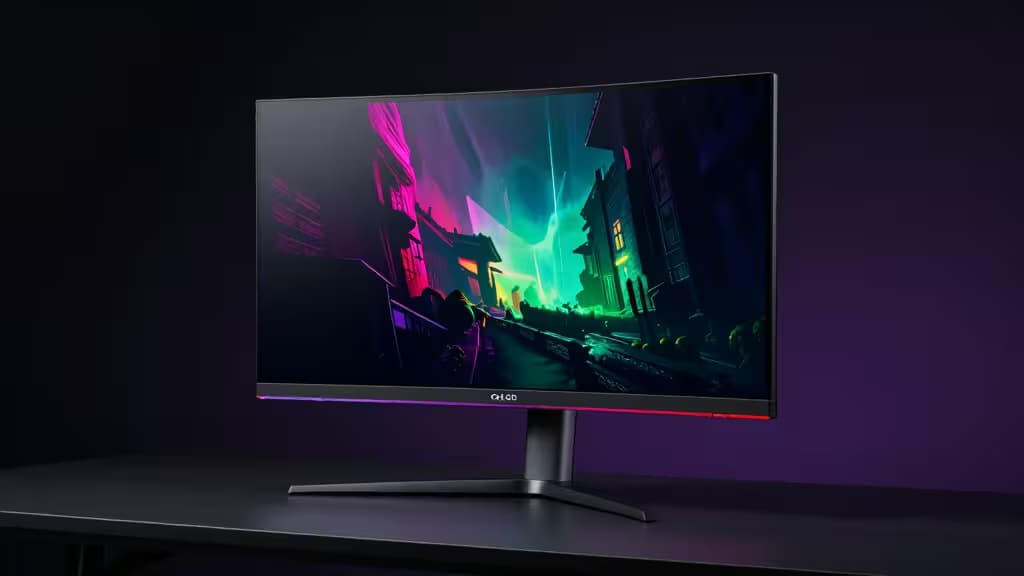
Best OLED Gaming Monitors Under $500
OLED gaming monitors have finally broken the $500 barrier in 2026. For years, OLED panels commanded $800–$1,500 premiums, putting them out of reach for most PC gamers. That's changed: a small but growing field of 27-inch 1440p 240Hz QD-OLED panels now dips under $500, and one ultrawide option hits the mark on sale.
This guide covers the best OLED gaming monitors you can actually buy under $500 right now — and one stretch pick for readers whose budget can flex upward.
Disclosure: Recomate earns affiliate commissions on qualifying purchases. Several monitors listed below are not yet in our product database, so affiliate links are available only for our stretch pick.
1. AOC Q27G4ZD — The Consensus Top Pick
The AOC Q27G4ZD is the monitor that made sub-$500 OLED real. It's a 27-inch 2560×1440 QD-OLED panel running at 240Hz with a blistering 0.03ms response time17. DisplayNinja features it as the standout sub-$500 OLED in their 2026 guide, citing its infinite contrast ratio, 99.3% DCI-P3 color gamut, and 3-year burn-in warranty1.
Price-wise, the AOC lists at $419.99 and currently sits around $485, with an all-time high of $519.99 and an average of $453.08 according to price history tracking6. 9to5toys has tracked the Q27G4ZD family dropping to as low as $340 on deal events3. At its list price, it's among the most affordable QD-OLED gaming monitors on the market.
The stand is fully ergonomic (height, tilt, swivel), and the monitor ships with HDMI 2.0 ×2 and DisplayPort ×2, G-Sync compatibility, and console-gaming readiness7. The 3-year warranty specifically covers burn-in — a critical reassurance for OLED longevity.
Why it wins: Consistent sub-$500 pricing, top-tier specs, and the strongest warranty in this group. If you want one OLED gaming monitor under $500 without hunting for sales, this is it.
2. Dell Alienware AW3423DWF — Best OLED Ultrawide Value
If you want immersion over raw frame rates, the Dell Alienware AW3423DWF is the play. It's a 34-inch 3440×1440 curved QD-OLED ultrawide running at 165Hz with a 0.1ms response time and 99.3% DCI-P3 coverage4.
The catch: at full price ($550–$600), it exceeds our $500 cap. But unlike.net's 2026 ultrawide comparison notes it regularly goes on sale in the $480–$530 range, making it "the single best ultrawide you can buy anywhere near this budget" when you catch a deal4. DisplayNinja also covers it as a sub-$500 option on sale1.
Why it's #2: You need to wait for a sale, and 165Hz is lower than the 240Hz panels on this list. But nothing else under $500 delivers the immersion of a 34-inch OLED ultrawide.
3. LG 27GX704A-B — The Glossy-Coating Alternative
The LG 27GX704A-B takes a different approach: instead of QD-OLED, it uses a third-generation W-OLED panel. Same 27-inch 1440p 240Hz fundamentals, but with a glossy coating that RTINGS reviewed in April 20262.
The advantage of W-OLED's glossy coating is that it avoids the "raised blacks" issue that QD-OLED panels can exhibit under direct ambient light — blacks stay truly black regardless of room lighting. The trade-offs: more text fringing (subpixel layout differences make small text slightly less crisp) and lower color luminance compared to QD-OLED2.
Why it's #3: If you game in a bright room or simply prefer a glossy screen, the LG is the strongest alternative to the AOC. It matches on resolution and refresh rate, and RTINGS' hands-on review confirms it as a legitimate entry-level OLED contender.
4. MSI MAG 273QP X24 — Competitive, But Volatile
The MSI MAG 273QP X24 matches the AOC on paper: 27-inch 1440p 240Hz QD-OLED. Noobfeed's review notes it normally retails for about $500 in the US5.
The problem is stock and price volatility. The same review reports that stock issues cause the price to spike, occasionally surpassing $600 — "drastically diminishing its worth"5. When it's in stock at $500, it's a solid alternative to the AOC with identical core specs. When it's not, the AOC's consistent pricing and better warranty make it the safer bet.
Why it's #4: Same panel class as the AOC, but you're paying a volatility tax. Only buy if you find it in stock at or below $500.
Stretch Pick: ASUS ROG Swift OLED PG32UCDM
If your budget can flex well above $500, the ASUS ROG Swift OLED PG32UCDM is the upgrade path. It's a 32-inch 4K (3840×2160) 240Hz QD-OLED — a fundamentally different tier of monitor. You get 4K resolution on an OLED panel, which none of the sub-$500 options offer. It's premium-priced, but for gamers who want OLED's perfect blacks at 4K, it's the things actually worth buying when budget allows.
How They Compare
| Monitor | Panel | Resolution | Refresh Rate | Price |
|---|
| AOC Q27G4ZD | QD-OLED | 1440p | 240Hz | ~$420–$485 |
| Dell AW3423DWF | QD-OLED | 3440×1440 (UW) | 165Hz | ~$500 on sale |
| LG 27GX704A-B | W-OLED | 1440p | 240Hz | Entry-level OLED |
| MSI MAG 273QP X24 |
All four sub-$500 options are 1440p 240Hz-class OLEDs (except the 165Hz Dell ultrawide). The AOC wins on consistent pricing and warranty. The Dell wins on immersion. The LG wins on glossy coating. The MSI is a solid alternative when in stock at $500.
How We Evaluated
We drew on detailed reviews and price tracking from DisplayNinja1, RTINGS2, 9to5toys3, unlike.net4, noobfeed5, price history data6, and Amazon product listings7. Prices were verified against current listings and historical price data as of June 2026.