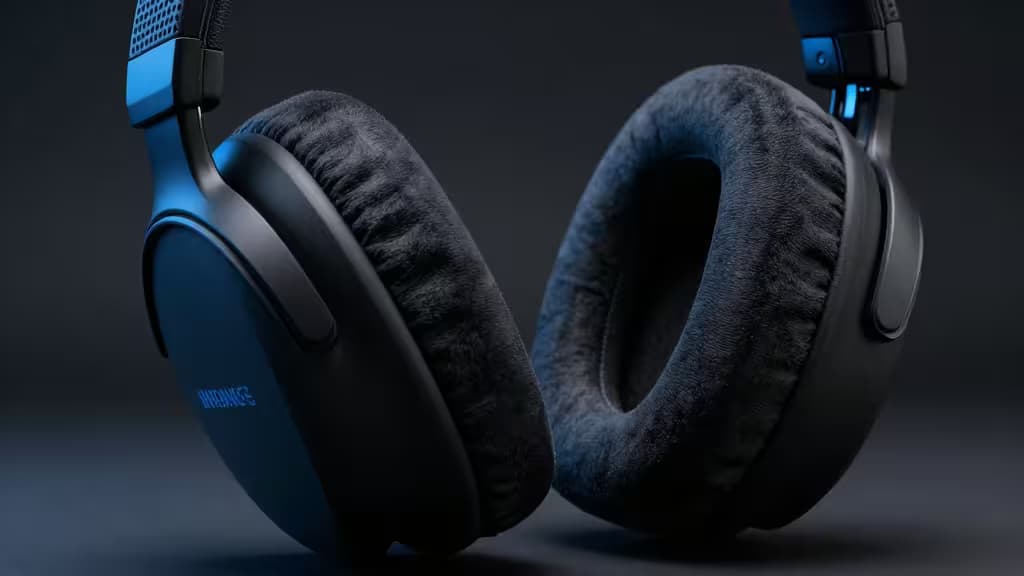
If you wear glasses, you already know the problem: twenty minutes into a raid and your temples are screaming. Most gaming headsets clamp down with enough force to press your frames into the sides of your head, and shallow earcups leave the temple arms digging into your skin. The result is fatigue, distraction, and — after a long enough session — a headache that has nothing to do with the boss fight.
The good news is that a handful of headsets are genuinely built with glasses wearers in mind. The two most important comfort factors are deep earcup cavities (which prevent temple contact entirely) and soft, breathable pad materials (velour is ideal because it distributes pressure more evenly than leatherette)2. Add in a lightweight frame and moderate clamping force, and you get a headset you can actually wear for hours.
We evaluated five headsets across those dimensions — earcup depth, pad material, clamping force, weight, and connectivity — to find the things actually worth buying if you game in glasses. (Disclosure: we may earn a commission on purchases through links in this article, which helps fund our testing.)
1. Astro A50 — Top Pick
The Astro A50 is the headset we'd reach for first as a glasses wearer. Its oversized, plush ear cups are explicitly designed for extended play and effortless accommodation of glasses1. That "oversized" designation matters: the earcup cavity is deep enough that your temple arms never make contact with the inside of the cup, which eliminates the single most common source of glasses-related discomfort.
It's also a premium wireless headset with PLAYSYNC audio switching, so you can bounce between console and PC without replugging1. The plush padding is soft enough to distribute pressure across a wide contact area rather than concentrating it on your frames. If budget is no object and you want the most glasses-accommodating gaming headset we tested, this is it.
Why it's the top pick: No other headset in this lineup combines oversized earcup depth, plush padding, and premium wireless as deliberately as the A50. It was designed with glasses wearers in mind, and it shows.
2. HyperX Cloud II — Best Value
The HyperX Cloud II has been a glasses-wearer favorite for years, and for good reason. It features deep earcup cavities and memory foam padding that already provide solid comfort out of the box2. But the real trick is the swappable cushions — swap the stock pads for the included velour set and you get maximum glasses comfort at a mid-range price2.
Velour is the gold standard for glasses wearers because it's breathable, soft, and distributes clamping pressure more evenly than leatherette2. The Cloud II's deep cavities mean your frames sit inside the cup rather than being pressed against the pad surface. Add 7.1 surround sound and a durable aluminum frame, and you have a headset that punches well above its price class.
Why it's the best value: You get deep earcups, swappable velour pads, and proven durability for far less than the premium picks. If you want glasses comfort without the premium price tag, start here.
3. Bose QuietComfort Ultra — Best for Cross-Use
Not every glasses wearer wants a dedicated gaming headset. If you split your time between gaming, music, and calls, the Bose QuietComfort Ultra is widely regarded as some of the most comfortable headphones available3. The cloud-like ear pads minimize pressure on glasses frames in a way that most gaming-focused headsets simply can't match3.
The trade-off is that this isn't a gaming headset per se — there's no boom mic or gaming-specific audio tuning. But what you get instead is world-class active noise cancellation3, which is invaluable if you game in a noisy environment. For glasses wearers who prioritize all-day comfort across multiple use cases, the QuietComfort Ultra is hard to beat.
Why it's the best for cross-use: No gaming headset matches the QC Ultra's pad softness and ANC. If comfort across gaming and everyday life is your priority, this is the one.
4. SteelSeries Arctis Nova Pro — Premium All-Rounder
The SteelSeries Arctis Nova Pro takes a different approach to glasses comfort: rather than oversized earcups, it relies on a comfort-focused design with a suspension-style headband that reduces overall downward pressure4. That means less weight pressing your frames into your temples, even if the earcup depth isn't as generous as the A50's.
It's a feature-rich premium headset with simultaneous wireless connections (so you can take a call on Bluetooth without dropping game audio), positional audio, and a Discord-certified ClearCast Gen 2 microphone4. The retractable mic disappears into the earcup when you're not using it, making it easy to transition from gaming to other activities.
Why it's a strong all-rounder: The suspension headband and comfort-focused design make it a solid choice for glasses wearers who also want premium features like dual wireless and a top-tier microphone.
5. Razer BlackShark V2 — Budget Pick
If you're on a tight budget, the Razer BlackShark V2 is the most glasses-friendly option under its price point. Its lightweight design directly reduces clamping pressure on glasses frames5 — less weight means less force pushing your temples into the pads. The aviation-style earcups are reasonably deep, and the Triforce titanium 50mm drivers deliver solid audio for the price5.
It's a wired headset, which some will see as a drawback and others as a reliability advantage (no battery to charge, no wireless interference). The pads are leatherette rather than velour, so they're not as breathable as the Cloud II's swappable cushions — but the low weight compensates by keeping overall pressure to a minimum.
Why it's the budget pick: Lightweight construction is one of the simplest ways to reduce glasses pressure, and the BlackShark V2 delivers that at an affordable price with competent audio to boot.
How We Compared Them
| Feature | Astro A50 | HyperX Cloud II | Bose QC Ultra | SteelSeries Nova Pro | Razer BlackShark V2 |
|---|
| Earcup Depth | Oversized | Deep cavities | Standard | Moderate | Moderate |
| Pad Material | Plush foam | Velour (swappable) | Cloud-like pads | Comfort-focused | Leatherette |
| Clamping Force | Low (glasses-friendly) |
The two factors that matter most for glasses comfort are earcup depth and pad material. Deep earcups prevent your temple arms from contacting the inside of the cup, while velour or plush pads distribute pressure evenly instead of concentrating it on your frames2. Lightweight builds and low clamping force are secondary but still significant — they reduce the overall pressure on your temples during extended sessions5.
The Bottom Line
If you want the best overall experience as a glasses-wearing gamer, the Astro A50 is our top pick for its deliberately oversized, glasses-accommodating earcups. For value, the HyperX Cloud II with its swappable velour pads is unbeatable. And if you want something that works as well for music and calls as it does for gaming, the Bose QuietComfort Ultra offers cloud-like comfort that no dedicated gaming headset can quite match.