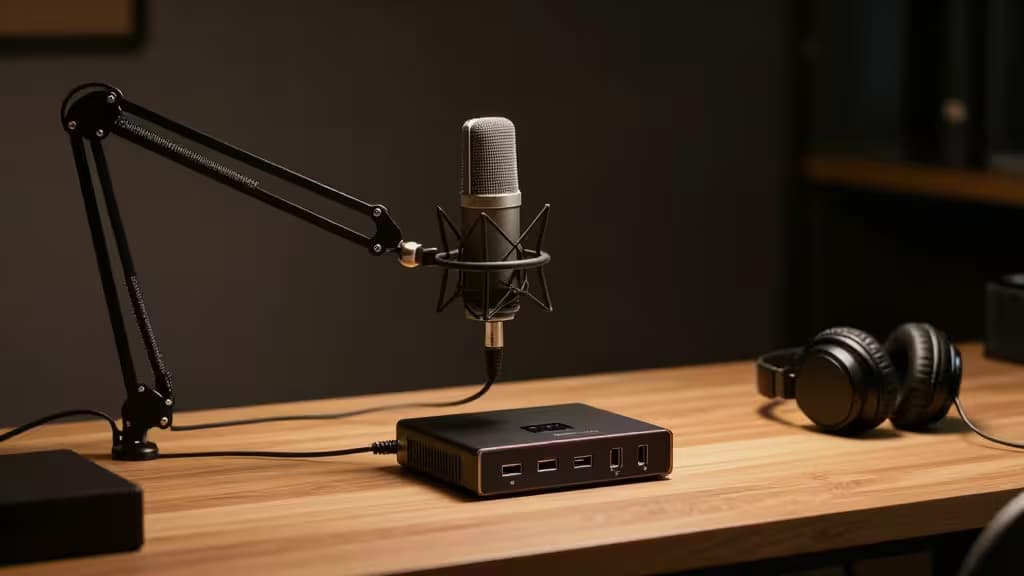
You don't need to spend a fortune to get pro-quality podcast audio. Under $150, a handful of USB audio interfaces deliver clean preamps, phantom power for condenser mics, and plug-and-play simplicity — the things actually worth buying when you're building a home podcast studio on a budget.
Every pick on this list shares three essentials: 48V phantom power (so you can run a condenser microphone), USB connectivity (no FireWire or Thunderbolt required), and a track record of real-world podcaster recommendations. The differences come down to preamp quality, input count, and whether you want the latest generation or a savvy deal on the previous one.
Disclosure: Recomate earns affiliate commissions on purchases made through links in this article. That never influences which products we recommend.
1. Focusrite Scarlett Solo (4th Gen) — Top Pick
The Scarlett Solo is the interface most podcasters will recognize, and for good reason. Focusrite's preamps are the industry standard for home studios, known for their clean gain and low noise floor14. The 4th Generation model improves on its predecessor with a redesigned Air mode that adds brightness and presence to vocal recordings — a genuine advantage for spoken-word content where clarity is everything1.
You get a single XLR mic input plus a dedicated instrument input, USB-C connectivity, and a robust software bundle that includes recording tools to get you started right out of the box4. Low latency monitoring means you can hear yourself in real time without distracting echo. Frequently found near the $100–$120 mark, it sits squarely within budget and delivers the best all-around preamp quality of any pick here.
Verdict: If you're a solo podcaster who wants the best sound quality per dollar, this is the one.
2. Behringer U-Phoria UMC202HD — Best Value Two-Input
If your podcast has a co-host or you regularly record two guests, the UMC202HD is the standout value pick. It offers two combo inputs (XLR + ¼") with Midas-designed preamps, and records at up to 24-bit/192kHz — resolution that exceeds what most podcasts will ever need2.
At under $100, you're getting dual-input capability that the Scarlett Solo simply can't match at this price point. The Midas preamp design delivers clean, usable gain for dynamic and condenser mics alike, and the unit is USB-powered so there's no wall adapter to manage. The trade-off: the software bundle is thinner than Focusrite's, and the preamps aren't quite as transparent at high gain. But for a two-mic setup on a budget, nothing else here competes.
Verdict: The best choice for co-hosted or two-mic podcasts under $100.
3. Behringer U-Phoria UMC22 — Ultra-Budget Pick
At roughly $50, the UMC22 is the cheapest viable audio interface for podcasting. It features a single XLR input with a Midas-designed preamp, 48V phantom power for condenser mics, and a sturdy metal chassis that feels more expensive than it is3.
The compromises are real: it tops out at 24-bit/48kHz (perfectly fine for podcasting, but not for music production), uses USB 2.0, and offers no second input. There's also no bundled software to speak of. But if you're a solo podcaster just starting out and every dollar matters, the UMC22 gets you recording with a condenser mic for less than the cost of a decent microphone cable and pop filter combined.
Verdict: The floor of what's worth buying — but it clears that floor comfortably.
4. Focusrite Scarlett Solo (3rd Gen, Refurbished) — Smart Buy
The 3rd Generation Scarlett Solo shares the same Air mode and core preamp design as the 4th Gen, and it remains one of the most widely recommended interfaces for podcasters5. The differences between generations are incremental — slightly improved preamp performance and a refreshed look on the 4th Gen — which means a refurbished or on-sale 3rd Gen unit delivers nearly identical sound quality for less money.
Frequently available under $100 through refurbished outlets and seasonal sales, this is the pick for the savvy shopper who wants Focusrite preamp quality without paying for the latest revision. You still get USB-C connectivity, the full software bundle, and the same compact form factor that made the Scarlett line famous5.
Verdict: The same sound as our top pick, for less — if you're willing to hunt for a deal.
How They Compare
| Inputs | Max Resolution | Price Tier | Best For |
|---|
| Scarlett Solo (4th Gen) | 1 mic / 1 inst | 24-bit/192kHz | ~$100–$120 | Solo podcasters wanting top preamp quality |
| UMC202HD | 2 mic / 2 line | 24-bit/192kHz | Under $100 | Co-hosted or two-mic podcasts |
| UMC22 | 1 mic / 1 inst | 24-bit/48kHz |
How to Choose
- Solo podcaster, best sound: Get the Scarlett Solo 4th Gen. The Air mode and preamp quality are worth the extra $20–$30 over the UMC22.
- Two-mic setup: The UMC202HD is the only pick here with dual inputs, and it costs less than a single-input Scarlett.
- Tightest budget: The UMC22 at ~$50 is the cheapest interface we'd actually recommend for podcasting. It works, it's built well, and it won't hold back a decent microphone.
- Want a deal: A refurbished Scarlett Solo 3rd Gen gives you Focusrite preamp quality and the full software bundle for under $100 — if you can find one in stock.
All four interfaces provide 48V phantom power, USB connectivity, and are widely recommended by podcasters1234. Your choice comes down to how many inputs you need, how much you want to spend, and whether the latest generation matters to you.