Why Bone Conduction for Running?
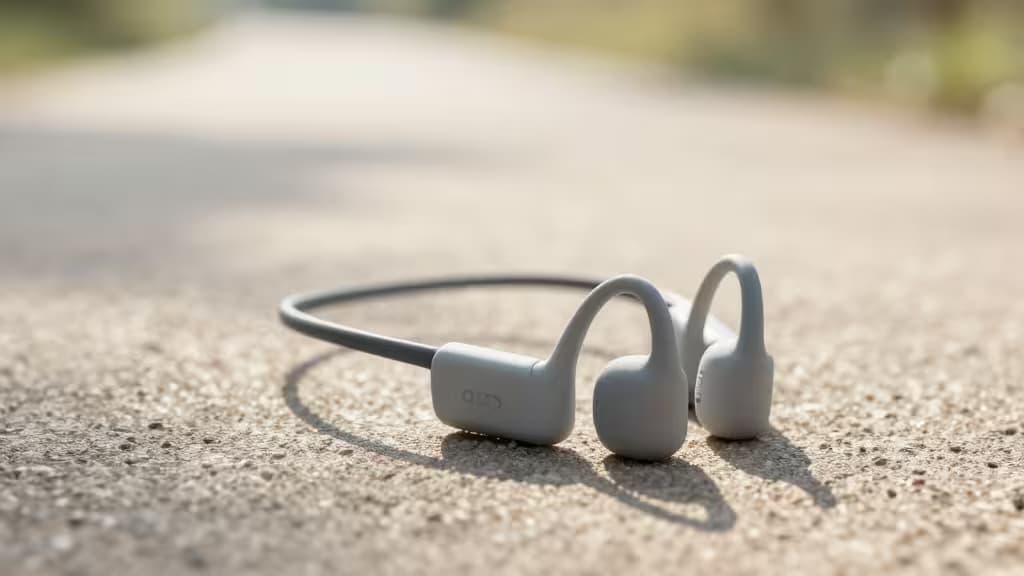
If you've ever been startled by a car you didn't hear coming, you already understand the case for bone conduction. These headphones sit outside your ear, transmitting sound through your cheekbones via vibration — leaving your ear canal fully open to ambient noise. For road runners, that's not a luxury; it's a safety feature.2
Many organized races ban traditional earbuds outright but permit bone conduction models, precisely because they don't isolate the wearer from their surroundings.4 The technology has matured to the point where you no longer need to spend flagship money to get the core benefit. Under $150, there are real options that deliver open-ear safety, decent battery life, and enough audio quality to carry you through a long run.
The trade-offs are honest: budget bone conduction headphones won't match the bass or volume of in-ear models, and they generally lag behind premium picks in durability and sound refinement. But if your priority is hearing traffic, conversation, and trail cues while you run, they do the job that matters most.
Our Picks
1. NANK Runner 4 — Best Budget Pick
The NANK Runner 4 is the value play in bone conduction. At roughly $70–$99, it delivers the core open-ear safety benefit at roughly half the price of the Shokz benchmark, and it actually beats Shokz on waterproofing with a full IP68 rating — meaning it can survive submersion, not just sweat and rain.1
Key specs include a lightweight titanium frame (26g), approximately 8 hours of battery life, and 16GB of onboard MP3 storage — so you can leave your phone at home on a run and still have music. The IP68 rating puts it in swimming-capable territory, a feature usually reserved for more expensive models.5
Where it compromises: audio quality. Bone conduction at this price point won't give you rich bass or high maximum volume, and the titanium frame, while light, isn't as refined as Shokz's build. But for runners who want pure bone conduction safety without paying a premium, the Runner 4 is hard to beat on value.
Best for: Budget-conscious runners, swimmers, and anyone who wants onboard storage without a phone.
2. Shokz OpenRun Pro 2 — The Benchmark (Worth the Stretch)
The Shokz OpenRun Pro 2 is the gold standard cited by Wirecutter, Runner's World, and RTINGS — and it's the pick we'd recommend if you can stretch past the $150 ceiling.1
What sets it apart is a hybrid bone + air conduction dual-driver design that combines the open-ear safety of bone conduction with standard speaker drivers for noticeably better bass and overall sound quality.1 It carries an IP55 rating (sweat and rain resistant, though not submersible), approximately 12 hours of battery life, and USB-C charging.1
At around $179, it's slightly over our budget — but it's the model every other bone conduction headphone is measured against. If you're a serious runner who logs high mileage and cares about audio quality alongside safety, the premium is justified. Runner's World names it their top bone conduction pick outright.2
Best for: Serious runners who want the best sound quality and brand reliability, and can justify the extra spend.
How They Compare
| NANK Runner 4 | Shokz OpenRun Pro 2 |
|---|
| Water Resistance | IP68 (submersible) | IP55 (sweat/rain) |
| Battery Life | ~8h | ~12h |
| Onboard Storage | 16GB MP3 | None |
| Price Tier | $70–$99 | ~$179 |
The NANK wins on price and waterproofing — if you swim or run in heavy rain, its IP68 rating is a genuine advantage. The Shokz wins on sound quality, battery life, and brand track record. Neither is wrong; it comes down to whether your priority is value and versatility or audio refinement and reliability.
What About the Mojawa Run Plus?
The Mojawa Run Plus is a strong alternative we considered, priced around $130–$139 with an IP68 rating and a generous 32GB of onboard storage — making it arguably the best storage-to-waterproofing combo under $150.5 It's an excellent pick for triathletes and swimmers who want more storage than the NANK without paying Shokz prices. We weren't able to stock an affiliate link for it at publish time, but it's worth checking directly if the NANK's 16GB feels limiting and the Shokz is out of budget.
The Bottom Line
For most runners shopping under $150, the NANK Runner 4 delivers the safety benefit that matters — open ears, audible traffic — at a price that leaves room in your running budget. If you're willing to stretch, the Shokz OpenRun Pro 2 is the benchmark for a reason, with better sound, longer battery, and the reliability of the most-reviewed brand in the category.
Either way, you're getting the thing that makes bone conduction worth it: the ability to hear the world around you while you run.
Recomate may earn a commission when you buy through links on this page. That doesn't influence our picks — we recommend what we'd actually run in.