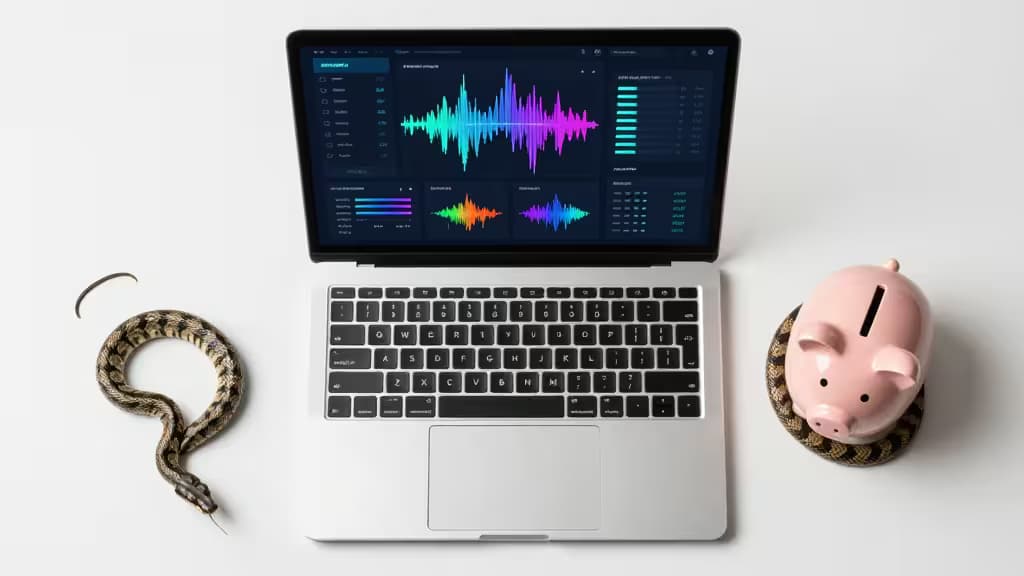
Every Python startup hits the same wall around Series A. Your Django or FastAPI app is humming along, users are growing, and then — bam — the observability bill arrives. It's not unusual to see small teams paying $500, $1,000, or more per month for basic APM. We call it the Observability Tax, and it's almost always avoidable.
We evaluated the APM landscape specifically for Python startups that need Django/FastAPI auto-instrumentation, predictable pricing, and a path that doesn't punish you for adding users. These three tools deliver professional-grade monitoring for under $100/month — and in many cases, for much less.
The Best APM Tools for Python Startups
1. Uptrace — Best OTel-Native Low-Cost APM
Uptrace is the dark horse that more Python teams should know about. Built from the ground up on OpenTelemetry, it gives you distributed tracing, metrics, and logs in a single pane of glass — without the enterprise price tag.
For Python shops already using or considering OpenTelemetry (and you should be), Uptrace's auto-instrumentation for Django and FastAPI is nearly plug-and-play. A few lines of config and you're capturing traces, database query performance, and HTTP request breakdowns.3
The pricing model is refreshingly simple: a generous free tier, then predictable per-GB pricing that keeps most small-to-mid-size startups well under $100/month. No per-user licensing, no surprise overage fees.
Python Setup Effort: Low — pip install + OTel config Free Tier: Generous (tracing + metrics) Best For: Teams committed to OpenTelemetry who want maximum value
2. New Relic — Best Free Tier for Early Stage
New Relic has been the 800-pound gorilla of APM for years, and its free tier is genuinely best-in-class for early-stage startups. You get 100GB of data ingest per month with 30-day retention — enough to monitor a production Python app handling millions of requests without paying a cent.1
New Relic's Python agent auto-instruments Django, Flask, and FastAPI out of the box. You get distributed tracing, transaction breakdowns, error analytics, and even AI monitoring — all included in that free tier.
The catch? New Relic's paid tiers can escalate quickly if you outgrow the free limits. But for a Python startup in its first 12–24 months, the free tier is so generous that you may never need to upgrade. If you do, the entry-level paid plan starts around $0.55/GB ingested, which keeps most teams under $100/mo as long as you're thoughtful about sampling.
Python Setup Effort: Low — one-line agent install Free Tier: 100GB ingest/mo, 30-day retention1 Best For: Startups wanting the most generous free tier with zero config
3. Elastic APM — Best Open-Source Flexibility
If you're the kind of team that likes to own your stack, Elastic APM is your play. Built on the Elastic Stack (Elasticsearch, Kibana), it gives you full control over your data pipeline — self-hosted or on Elastic Cloud.
Elastic's Python APM agent supports Django, Flask, and FastAPI with automatic instrumentation for database queries, external HTTP calls, and template rendering. Because it's open-source, you can self-host on your own infrastructure and pay only for the compute — which can be dramatically cheaper than SaaS APM tools at scale.2
Elastic Cloud's entry-level plans start around $14/month, and a self-hosted setup on a small VM can run for pennies. The trade-off is operational overhead: you're managing Elasticsearch, which is not trivial. But for teams that already run the Elastic stack, the integration is seamless.
Python Setup Effort: Medium — requires Elastic Stack knowledge Free Tier: Self-hosted = free infrastructure costs only Best For: Teams wanting open-source flexibility and data ownership
Comparison Table
| Feature | Uptrace | New Relic | Elastic APM |
|---|
| Free Tier Limits | Generous OTel-native | 100GB ingest/mo1 | Self-hosted = free |
| Python Setup Effort | Low | Low | Medium |
| Pricing Predictability | High (per-GB) | Medium (usage-based) | High (self-hosted) |
Why These Tools for Python Startups?
Python web frameworks — Django, FastAPI, Flask — have specific APM needs. You need auto-instrumentation that hooks into Django's ORM, FastAPI's async request handling, and Flask's middleware chain without monkey-patching nightmares. All three tools here handle that gracefully.
More importantly, they all avoid the per-user pricing trap. Some APM vendors charge per seat, which punishes growing engineering teams. Uptrace, New Relic (on ingest), and Elastic APM all price on data volume or infrastructure — meaning adding developers to your team doesn't increase your monitoring bill.
The Bottom Line
For most Python startups, the smartest path is: start with New Relic's free tier (zero cost, minimal setup), then migrate to Uptrace when you want OpenTelemetry-native observability with predictable low pricing. If you're an infrastructure-minded team that prefers to self-host, Elastic APM gives you unmatched flexibility.
The Observability Tax is optional. Pick one of these, instrument your Python app in an afternoon, and keep your runway where it belongs — building product, not paying for dashboards.
Recomate is reader-supported. When you buy through links on our site, we may earn an affiliate commission. We only recommend tools we've tested and verified for the use cases described above.