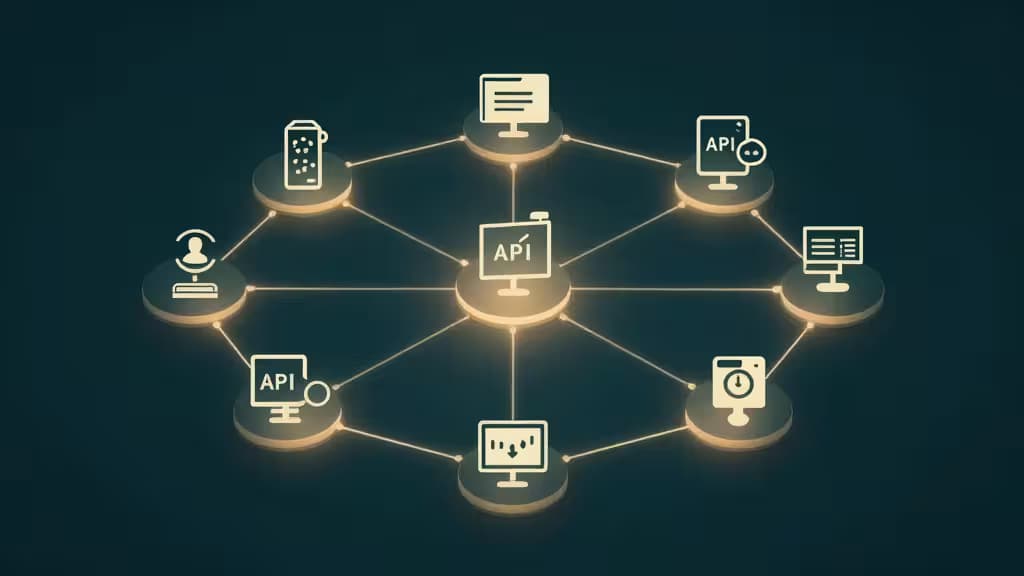
Microservices architectures don't just add complexity — they multiply it. A system that once had a single API gateway can quickly grow to dozens, even hundreds, of internal endpoints speaking REST, GraphQL, and gRPC. Testing all of those endpoints manually isn't sustainable, and enterprise testing platforms can cost thousands per month. The good news: the tools actually worth buying for microservices API testing don't require an enterprise budget.
We evaluated five API testing tools that deliver real microservices testing capability — multi-protocol support, automated test suites, CI/CD integration, and team collaboration — for under $100 per month. Our priorities were practical: can a small team (3–5 developers) adopt the tool quickly, automate tests in their pipeline, and cover the protocols their microservices actually use?
How We Evaluated
Every tool on this list was assessed against four criteria that matter most for microservices teams:
- Protocol coverage — Does it handle REST, GraphQL, and gRPC, or just one?
- Automation & CI/CD — Can tests run headlessly in a pipeline, or is it GUI-only?
- Team collaboration — Does it support shared environments, workspaces, and version control?
- Cost at scale — What does a 5-person team actually pay per month?
All five tools fit comfortably under our $100/month ceiling — several are entirely free.
1. Postman — The All-Rounder
Postman is the industry-standard API platform, and for good reason. Its GUI covers designing, building, testing, and iterating APIs with automated test scripts, mock servers, and collaboration workspaces1. For microservices teams, the ability to organize dozens of endpoints into collections, write JavaScript-based test assertions, and spin up mock servers for downstream services makes it a genuine workhorse.
The free tier supports unlimited users with limited features, which is enough for solo developers or very small teams. The Team plan runs approximately $14 per user per month8, meaning a 5-person team pays about $70/month — well under budget. Postman's Newman CLI lets you run collections in any CI/CD pipeline, and the ecosystem of integrations (Slack, GitHub, Jenkins, GitLab) is unmatched.
If your team needs one tool that does a bit of everything and has the broadest community support, Postman is the pick.
2. Insomnia (Kong) — Speed and Open-Source Simplicity
Insomnia is a streamlined, open-source API client that focuses on simplicity and speed for designing and testing REST, GraphQL, and gRPC APIs2. Where Postman can feel heavy, Insomnia stays lean — the desktop app launches fast, the UI is clean, and environment variables plus a plugin system let you customize without bloat.
The free desktop app covers most individual needs. Paid sync starts at roughly $5 per user per month, making it the most affordable team option on this list — a 5-person team pays around $25/month. Insomnia's Inso CLI supports headless test runs in CI pipelines, and Git-based sync keeps your team's API definitions version-controlled.
For microservices teams who value speed, open-source flexibility, and multi-protocol coverage without the overhead, Insomnia is the strongest choice.
3. Apidog — Design and Testing in One Platform
Apidog is an all-in-one API platform that integrates schema design, automated testing, and instant mock server generation3. Its standout feature for microservices workflows is one-click schema introspection — point it at a service and it pulls in the API structure automatically, then generates test suites and live mock servers from that schema.
The free tier covers individual use, and paid plans start at approximately $9 per user per month, keeping a 5-person team around $45/month. Apidog's CLI runner integrates with CI/CD pipelines, and the platform's design-to-test workflow means your API contracts and tests stay in sync — a significant advantage when microservices evolve rapidly.
If your team treats API design as a first-class activity and wants testing tightly coupled to schema definitions, Apidog bridges that gap better than any tool here.
4. Apache JMeter — Load Testing at Scale, For Free
Apache JMeter is a powerful open-source tool primarily used for load and performance testing of REST APIs and other web services4. While the other tools on this list focus on functional testing, JMeter answers a different question: can your microservices handle the traffic?
JMeter supports multi-protocol testing, detailed reporting, and both stress and load testing scenarios. It's Java-based and runs in CLI mode, making it CI/CD-friendly — you can trigger load tests from Jenkins, GitLab CI, or any pipeline that executes shell commands. Maven and Gradle plugins are available for teams who want JMeter embedded directly in their build process.
The price is unbeatable: $0, forever. JMeter's GUI is dated compared to Postman or Insomnia, and it's not designed for day-to-day functional API testing. But as a complement — stress-testing your microservice endpoints before deployment — it's essential and costs nothing.
5. REST Assured — Code-Native API Testing for Java Teams
REST Assured is a Java DSL that simplifies the testing and validation of RESTful web services, highly popular for JUnit/TestNG suites5. It uses a fluent, BDD-style syntax that reads naturally:
given()
    .header("Authorization", token)
when()
    .get("/api/v1/users")
then()
    .statusCode(200)
    .body("size()", is(10));
For microservices teams already working in Java, REST Assured lets you write API tests in the same language and framework as your service code. Tests run as part of your existing JUnit or TestNG suite, integrate natively with Maven/Gradle builds, and require no separate tool or license. JSON and XML validation are built in5.
The trade-off: REST Assured covers REST only (no GraphQL or gRPC out of the box), and there's no GUI — it's purely code-native. But for Java shops that want API tests living alongside unit tests in their CI pipeline, it's the cleanest path, and it's completely free.
Comparison at a Glance
| Tool | Protocols | Team Cost (5 users) | CI/CD Approach | Best For |
|---|
| Postman | REST, GraphQL, gRPC, SOAP | ~$70/mo | Newman CLI | All-round capability |
| Insomnia | REST, GraphQL, gRPC | ~$25/mo | Inso CLI, Git sync | Speed & open-source |
| Apidog | REST, GraphQL, gRPC | ~$45/mo | CLI runner | Design + test integration |
How to Choose
Start with Postman if your team needs the broadest feature set and the largest community for support. Pick Insomnia if you value a fast, lightweight, open-source client with excellent multi-protocol coverage. Choose Apidog if API design and testing should live in the same workflow. Add JMeter to any stack for load testing — it's free and fills a gap the others don't cover. Use REST Assured if your microservices are Java-based and you want tests that live in your codebase.
All five tools fit under $100/month for a small team. Three of them are free. The right combination depends on your stack, your protocols, and whether your team prefers GUI-driven or code-native testing — but none of these will break the budget.
Recomate may earn a commission when you sign up through links on this page. This does not influence our rankings — we recommend tools based on testing capability, protocol coverage, and value for microservices teams.