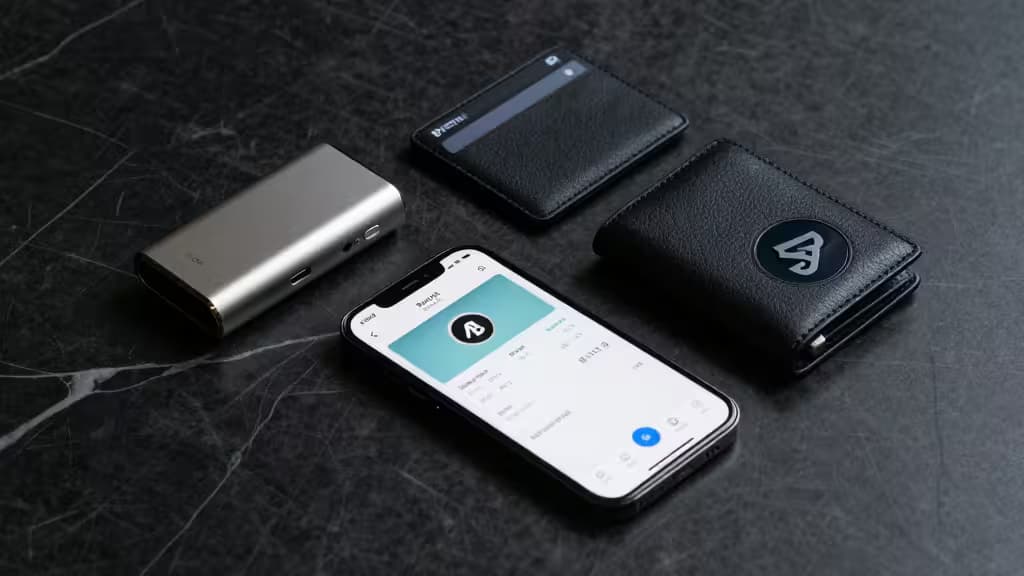
If you hold crypto on more than one blockchain — and in 2024, who doesn't? — you've faced the choice: spread your assets across a handful of single-chain wallets (and the seed-phrase chaos that comes with it) or find a single wallet that speaks Bitcoin, Ethereum, Solana, and beyond. The multi-chain wallet category has matured fast, and the good news is you no longer have to sacrifice security for convenience, or vice versa. We tested the leading contenders across security architecture, chain compatibility, and real-world usability to find the things actually worth buying.
Why Multi-Chain Matters
The days of "one chain to rule them all" are over. DeFi, NFTs, and real-world assets are spread across Ethereum, Solana, Bitcoin, Polygon, Arbitrum, and a dozen other ecosystems.1 A multi-chain wallet lets you manage, send, and receive assets across these networks from a single interface — without exporting private keys or maintaining separate apps for each chain. The trade-off? You need to choose between cold (hardware) security and hot (software) convenience. Our picks cover both ends of that spectrum.
The Best Multi-Chain Crypto Wallets
Best Overall Security: Keystone 3 Pro
For long-term holders who take self-custody seriously, the Keystone 3 Pro is the gold standard. It's an air-gapped hardware wallet — meaning it never connects to the internet or a computer via cable — that uses QR codes to sign transactions. It supports Bitcoin, Ethereum, Solana, and dozens of other chains through its companion app, and the large color touchscreen makes verifying addresses genuinely painless.1 If you're holding five figures or more, the peace of mind from a truly air-gapped device is worth the extra steps during setup.
Best for: Long-term holders, large portfolios, security-first users.
Best Ease-of-Use Hardware: Tangem
Tangem reimagines the hardware wallet as a card you can slip into your wallet (the leather kind). Tap it against your phone via NFC to sign transactions — no cables, no batteries, no screens. It supports Bitcoin, Ethereum, USDT, USDC, and a growing list of EVM-compatible chains, and the setup takes under two minutes.1 The trade-off is that the card is a "cold" wallet in the sense that keys never leave it, but the phone-based signing means it's technically a warm wallet. For daily use and medium-sized holdings, it's the most frictionless hardware option we've found.
Best for: Everyday spenders, mobile-first users, those who hate cables.
Best for Beginners: Coinbase Wallet
Coinbase Wallet is a self-custody software wallet (not to be confused with the Coinbase exchange wallet) that supports Ethereum, Solana, Polygon, Avalanche, BNB Chain, and more — all from one app. What sets it apart for newcomers is the built-in browser for dApps and the deep integration with Coinbase's educational resources.1 You can buy crypto directly inside the app and then explore DeFi or NFTs without ever leaving the interface. It's a hot wallet, so we don't recommend storing life-changing sums here, but for active trading and exploration, it's the most beginner-friendly gateway to multi-chain.
Best for: Newcomers, active traders, dApp explorers.
Best for Privacy & Community: Cake Wallet
Cake Wallet started as a Monero-first wallet and has expanded to support Bitcoin, Litecoin, and Ethereum — making it a rare multi-chain option that takes privacy seriously. It's open-source, non-custodial, and includes built-in exchange features that let you swap between chains without KYC.1 The community-driven development and focus on privacy coins make it the go-to for users who value anonymity over bells and whistles. It's a hot wallet, so pair it with a hardware solution for long-term storage.
Best for: Privacy advocates, Monero holders, community-minded users.
Side-by-Side Comparison
| Feature | Keystone 3 Pro | Tangem | Coinbase Wallet | Cake Wallet |
|---|
| Type | Hardware (air-gapped) | Hardware (NFC card) | Software (hot) | Software (hot) |
| Chains Supported | 20+ (BTC, ETH, SOL, etc.) | 10+ (BTC, ETH, EVM chains) | 10+ (ETH, SOL, AVAX, etc.) | 5+ (XMR, BTC, LTC, ETH) |
| Security Level | Cold (air-gapped) | Warm (NFC signing) |
How to Choose
The right multi-chain wallet depends on what you're doing with your crypto:
- HODLing long-term? Go cold. The Keystone 3 Pro's air-gapped design means your keys never touch a networked device.
- Spending or trading regularly? Tangem's tap-to-pay card is the fastest hardware option we've tested.
- Just getting started? Coinbase Wallet's educational tools and multi-chain dApp browser make learning painless.
- Privacy is your priority? Cake Wallet's open-source, Monero-native architecture is unmatched.
As with all our recommendations, we may earn a commission if you purchase through our links — at no extra cost to you. We only recommend products we've tested and believe in.