Why Most Crypto Wallets Aren't Built for Retirees
If you've spent decades managing a checking account, a brokerage, and maybe a safe-deposit box, the world of crypto wallets can feel like it was designed by and for people who enjoy pain. Tiny screens. Twelve-word seed phrases you're told to engrave on titanium. Buttons the size of a grain of rice. And almost no guidance on what happens to your assets when you're no longer around to manage them.
We disagree with that approach. The things actually worth buying in crypto should work the same way good financial tools always have: they should be understandable, physically manageable, and built with estate planning in mind. That last point matters more for retirees than for any other demographic — if your heirs can't access your wallet, your savings may be gone for good.
So we evaluated wallets on three criteria that matter specifically for older users:
- Simplicity of setup and daily use. How many steps does it take to get started? Can someone who has never used crypto figure it out?
- Physical ease. Are the buttons, screens, and form factors manageable for hands and eyes that aren't twenty anymore?
- Estate planning. Is there a clear, documented path for a spouse, executor, or heir to access the assets?
We deliberately excluded advanced tools — privacy-coin wallets like Cake and Wasabi, hardware devices like Coldcard, and software like Sparrow and Electrum — because they demand technical knowledge that most retirees shouldn't need to acquire just to hold some Bitcoin. DeFi and DEX tools are similarly irrelevant here.
Our Picks
1. Tangem Wallet — The Simplest Hardware Wallet You Can Buy
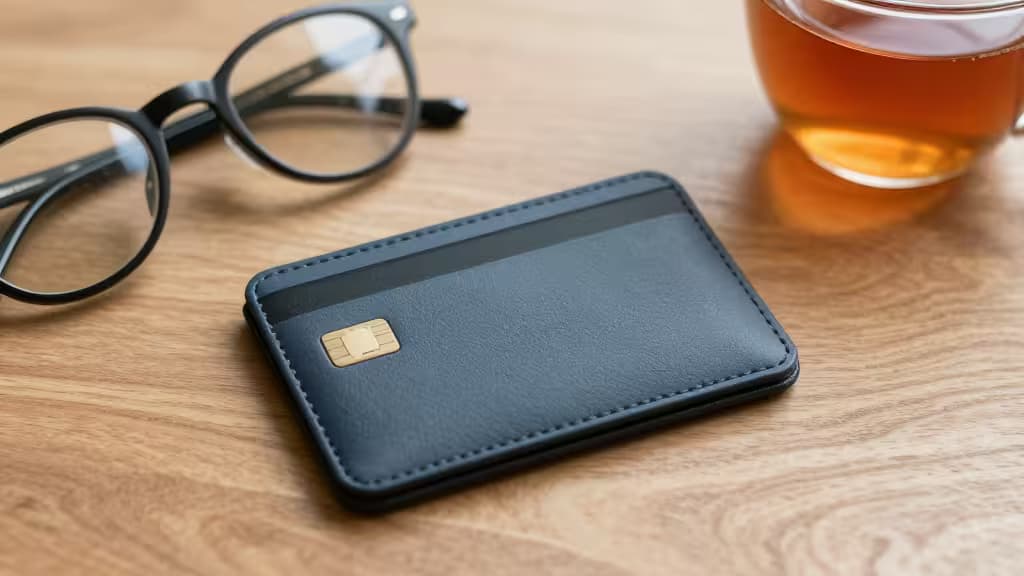
Most hardware wallets look like USB sticks with microscopic screens. Tangem looks like a credit card. You tap it against the back of your phone, and that's it — no batteries, no cables, no screen to squint at.1
The standout feature for seniors is the elimination of the seed phrase. Tangem's card-based system generates and stores keys on the card's secure chip, so you don't need to write down and safeguard twelve or twenty-four random words.1 For anyone who has worried about losing a piece of paper with their life savings on it, this is a meaningful simplification.
The card form factor is also physically familiar. Seniors handle cards every day — credit cards, Medicare cards, library cards. There's no new muscle memory to learn. The low price band makes it accessible for someone who wants to try hardware security without a large upfront commitment.1
Where it falls short: Estate planning is less straightforward than with a custodial exchange. You'll need to keep the card (and any backup cards) somewhere your executor can find them, and you'll need to leave instructions about how to use the Tangem app. It's manageable, but it requires you to think it through.
2. Coinbase — The On-Ramp Most Seniors Should Start With
Before you need a wallet, you need a way to buy crypto. Coinbase is the most beginner-friendly exchange we found, with a regulated, straightforward interface and direct credit card purchases.2 If you've never bought crypto before, this is where to start.
The regulated status matters for trust. Seniors who have spent a lifetime working with FDIC-insured banks and SEC-regulated brokerages have a reasonable expectation that their financial providers operate under legal oversight. Coinbase is one of the most regulated exchanges in the U.S., which provides a level of comfort that smaller, offshore platforms can't match.2
The interface is clean and walks you through each step — identity verification, linking a payment method, making a purchase. Moderate fees apply, but for the ease of use, most beginners will find them acceptable.2
Where it falls short: Funds held on the exchange are custodial — Coinbase holds the keys, not you. For larger amounts or long-term holding, you'll want to move assets to a wallet you control (see our picks below). The fees, while moderate, are higher than what dedicated traders would accept.
3. Coinbase Wallet — Free Self-Custody With a Familiar Bridge
Once you're comfortable buying crypto on Coinbase, the natural next step is taking self-custody — holding your own keys rather than trusting an exchange. Coinbase Wallet is a free app that does this while maintaining integration with the Coinbase exchange account you already have.3
This integration is the key advantage for seniors. Rather than learning an entirely new ecosystem, you move from the exchange you know into a wallet that connects to it. The UI is consistent with Coinbase's design language, so there's no jarring transition.3
For estate planning, the connection to a centralized exchange account provides a practical advantage: your heirs can work with Coinbase's support team to access the exchange account, and from there, the wallet integration provides a documented trail of your holdings.3
Where it falls short: It's a software wallet, which means your keys live on your phone. If you lose the phone without a proper backup, you could lose access. The seed phrase backup is still required — there's no way around it for true self-custody.
4. Coinbase Vault — Built for Retirees Thinking About Estate Planning
This is the pick that most directly addresses a concern unique to retirees: what happens to your crypto when you're no longer able to manage it yourself.
Coinbase Vault is a custodial storage solution that uses time-delayed withdrawals and multi-signature approval to add a layer of protection against impulsive decisions, scams, and unauthorized access.4 The time-lock means that even if someone gains access to your account, they can't immediately drain it — there's a waiting period during which you (or your designated contacts) can cancel the withdrawal.
For estate planning, the custodial model is actually an advantage. Because Coinbase holds the assets, your executor can work with the company during probate to access the vault — a far simpler process than trying to recover keys from a hardware wallet the deceased never explained to anyone.4
Where it falls short: You're trusting Coinbase with custody, which means you're subject to their policies and any potential regulatory actions against the company. For maximum security against institutional risk, hardware wallets like Tangem remain the gold standard. The vault is best understood as a complement to, not a replacement for, self-custody.
How to Choose
If you want the simplest possible hardware wallet: Get Tangem. The card form factor and seed-phrase-free design make it the most accessible cold-storage option for non-technical users.1
If you're buying crypto for the first time: Start with Coinbase. The regulated, guided experience is the gentlest on-ramp available.2
If you want self-custody without leaving the Coinbase ecosystem: Use Coinbase Wallet. It's free and bridges naturally from your exchange account.3
If estate planning is your primary concern: Set up a Coinbase Vault. The time-lock and custodial model make it the easiest option for your heirs to manage.4
If you want affordable open-source hardware security: The Trezor Safe 1 is a well-regarded budget option with physical buttons that some may find easier than touchscreens.5 We also noted the BitBox02 as a Swiss-made alternative with a simplified backup process for those who value engineering simplicity.6
A Note on How We Work
Recomate earns affiliate commissions when readers click through to some of the products we recommend. That doesn't change our evaluation — we'd rather lose a commission than recommend a wallet that frustrates a retiree. Our picks are based on product features, usability, and how well each option serves the specific needs of older users entering crypto for the first time.
We weren't able to conduct hands-on testing for this guide due to research limitations, so our recommendations are based on product documentation, feature sets, and published specifications. We'll update this guide as we're able to test these wallets directly.