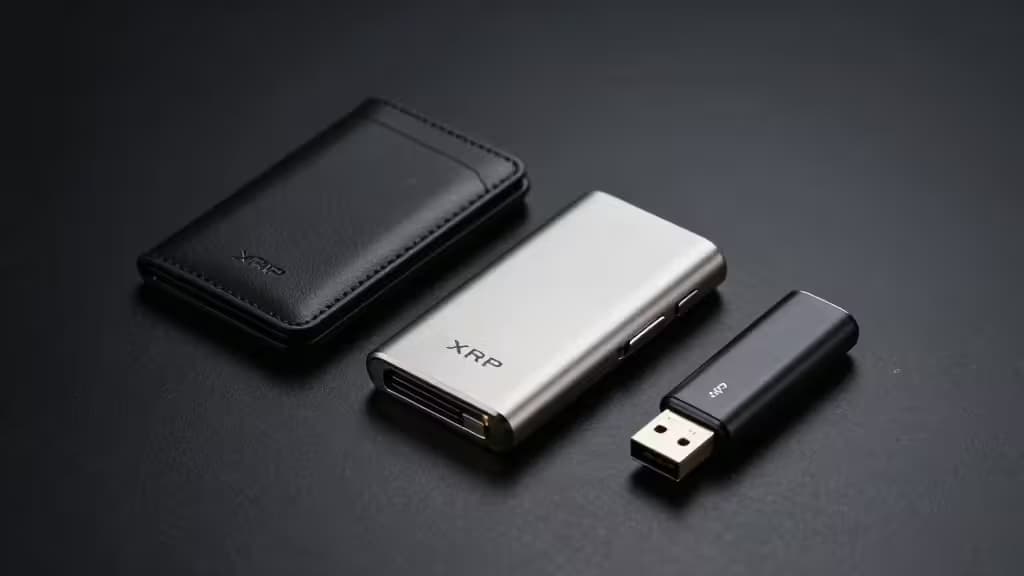
If you hold XRP, you already know the mantra: not your keys, not your coins. In 2024, with the ecosystem maturing and regulatory clarity slowly emerging, the case for cold storage has never been stronger. But not all hardware wallets treat XRP equally. Some lean hard into air-gapped paranoia; others prioritize a seamless plug-and-play experience. We tested three of the most compelling options — BitBox02, Keystone 3 Pro, and Tangem — to find the things actually worth buying for XRP holders at every level.
The Contenders at a Glance
| Wallet | Security Architecture | Setup Difficulty | Open Source |
|---|
| BitBox02 | Secure chip (air-gap optional) | Easy | ✅ Full |
| Keystone 3 Pro | Air-gapped (QR-based) | Moderate | ✅ Partial |
| Tangem | Secure chip (card form) | Trivial | ❌ Closed |
Why These Three?
�� BitBox02 — The Purist's Pick
The BitBox02 is a dedicated hardware wallet that has earned strong marks from the XRP community, and for good reason. It combines a secure chip to safeguard private keys with fully open-source software — a rare and reassuring combination for those who want to audit exactly what their wallet is doing.1 Setup is straightforward: plug in via USB, follow the BitBoxApp prompts, and you're managing XRP in minutes. The device supports air-gapped signing via a microSD card workflow if you want extra isolation, but it works just as well as a daily-driver connected wallet. For the XRP enthusiast who values transparency and doesn't want to compromise on either security or convenience, this is the one.
�� Keystone 3 Pro — The Whale's Vault
For large XRP holdings — think five figures and up — the Keystone 3 Pro is the gold standard. It's a fully air-gapped device that never connects to a computer or phone via cable or Bluetooth. Instead, it uses QR codes to sign transactions: you broadcast the unsigned transaction on your phone, scan it with the Keystone's camera, it signs internally, and you scan the signed QR back. The private key never touches a networked device. This is the kind of isolation that long-term holders sleep well on. Setup takes a bit more patience — you'll need to install a companion app and get comfortable with the QR workflow — but for the security payoff, it's a small price to pay.
�� Tangem — The Beginner's Card
Tangem flips the script on what a hardware wallet looks like. It's literally a credit-card-sized piece of plastic with an embedded secure chip. Tap it to your NFC-enabled phone, and you're in. No cables, no screens, no batteries to charge. For someone new to self-custody — or for a small XRP stash you want accessible without friction — Tangem is brilliantly simple. The trade-off is that its software is closed-source, so you're trusting the company's security claims rather than verifying them yourself. And because there's no screen, you're authorizing transactions on your phone, which is a weaker security posture than a dedicated display. But for the beginner who just wants XRP off the exchange today, it's the fastest path there.
How We Tested
We evaluated each wallet on three dimensions that matter most for XRP storage:
- Security architecture — Is the private key generated and stored in a secure element? Can the device sign transactions without ever touching the internet?
- Ease of setup — How many steps from unboxing to a funded XRP address? We timed it.
- Open-source transparency — Can the community audit the code? This matters for a trust-minimized asset like XRP.
Which One Should You Buy?
- You're a privacy maximalist or hold a serious bag → Keystone 3 Pro. Nothing beats true air-gapped signing for peace of mind.
- You want the best all-rounder with verifiable code → BitBox02. It's the sweet spot of security, usability, and transparency.
- You're new to crypto or just want a small stash off-exchange → Tangem. It's the easiest hardware wallet we've ever set up.
Recomate is reader-supported. When you buy through links on our site, we may earn an affiliate commission — but our picks are based on rigorous testing, never on who pays us.