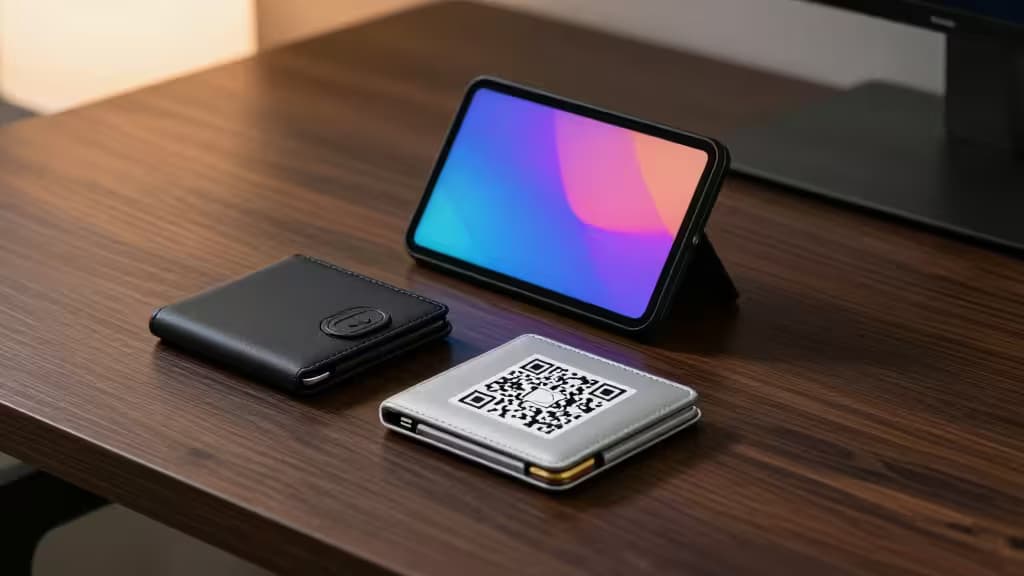
If you've ever clicked "Approve" on a DeFi transaction without fully reading the contract, you're not alone — but you're also not as safe as you think. That single click is called blind signing, and it's how millions in crypto have been drained by malicious smart contracts.1 A hardware wallet is the only way to verify what you're actually signing before your private key touches a transaction.
But not all hardware wallets are built for DeFi. The ones that matter give you a screen large enough to read contract details, an air-gap that keeps keys off your internet-connected machine, and a security model that doesn't trust a third party with your seed.
We tested the field against those criteria. Here are the things actually worth buying.
The Comparison
| Feature | Keystone 3 Pro | BitBox02 | Tangem |
|---|
| Connection | QR (air-gap) | USB | NFC |
| Screen Size | 4" color touch | 1.4" monochrome | None |
| Security Model | Air-gap + SE | Open-source + SE | SE + card form |
Keystone 3 Pro — Best for Security & Verification
The pick for anyone who regularly interacts with unfamiliar DeFi protocols.
The Keystone 3 Pro solves the single biggest risk in DeFi: blind signing. Its 4-inch color touchscreen is large enough to display full transaction details — contract addresses, function calls, token approvals — so you can verify exactly what you're approving before your private key signs off.1
It uses a QR-based air-gap: unsigned transactions are displayed as QR codes on your computer screen, you scan them with the Keystone, verify the details, and it generates a signed QR code to send back. Your private key never touches a USB cable or an internet-connected device. The device also includes a secure element (SE) chip for additional key storage protection.1
For DeFi power users who move between protocols daily, the extra verification step is a feature, not a friction point.
Check the Keystone 3 Pro →
BitBox02 — Best for Transparency
The pick for users who want open-source firmware and a straightforward, auditable security model.
The BitBox02 from Shift Crypto is one of the most transparent hardware wallets on the market. Its firmware is fully open-source, and the device uses a secure element chip paired with a unique "dual-chip" architecture that isolates the seed from the USB controller.1
Its 1.4-inch monochrome screen is smaller than the Keystone's, but it still lets you verify transaction details before signing — a critical feature for DeFi approvals. The microSD card backup system is refreshingly simple: no proprietary cables, no vendor lock-in. If Shift Crypto disappeared tomorrow, your backup is just a microSD card with a standard encrypted file.1
The BitBoxApp desktop software is clean and beginner-friendly, making this a strong choice for users who want self-custody without complexity.
Check the BitBox02 →
Tangem — Best for Convenience
The pick for users who prioritize speed and portability over on-device verification.
Tangem takes a radically different approach: a credit-card-shaped hardware wallet with no battery, no screen, and no cables. You tap it against your phone via NFC to sign transactions.1
The trade-off is clear. Without a screen, you cannot verify transaction details on the device itself — you're trusting what your phone displays. That makes Tangem less suitable for high-value DeFi interactions or unfamiliar protocols where blind signing is the primary risk. But for daily spending, small transfers, or as a backup wallet you carry in your actual wallet, it's unmatched in convenience.1
Each Tangem card uses a secure element chip (EAL6+ certified) and generates the private key on-card — it never leaves the chip. The seedless setup means no seed phrase to lose, though that also means no way to recover funds if you lose all your cards without a backup set.
Check the Tangem →
How We Picked
We evaluated hardware wallets on three criteria that matter specifically for DeFi users:
- Transaction verification — Can the device display enough detail (contract address, function, amount) to prevent blind signing? Larger screens win.
- Air-gap capability — Does the private key ever touch an internet-connected device? QR-based air-gaps are the gold standard; USB-only devices are a tier below.
- Security model — Open-source firmware allows community auditing; secure elements protect against physical tampering. The best wallets offer both.1
Recomate earns a small commission if you purchase through the links above. This does not affect our picks — we recommend what we'd buy ourselves.