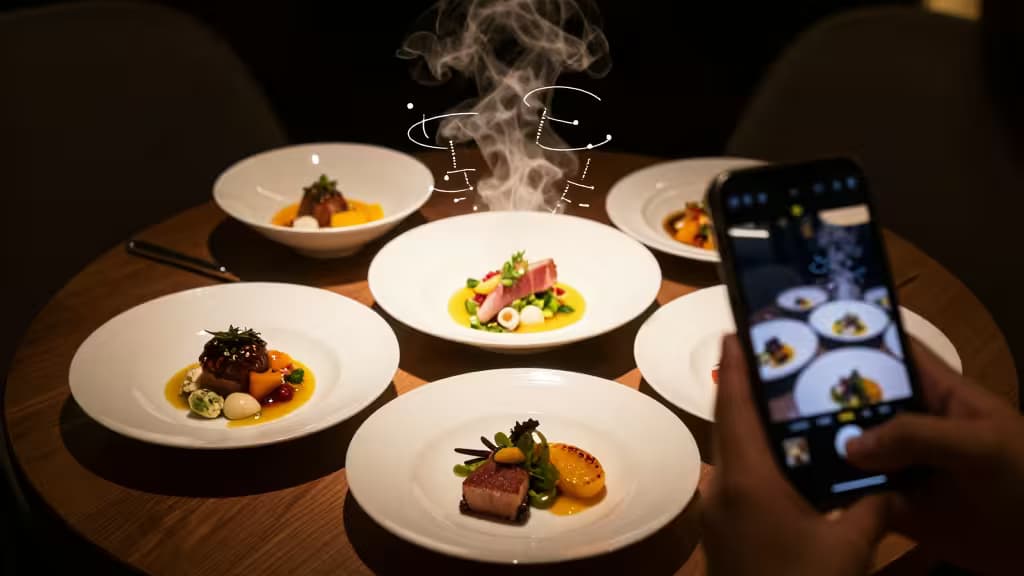
Restaurant owners juggle thin margins, staffing shortages, and the relentless demand for fresh marketing content — often all in the same shift. AI tools have quietly closed the gap between single-location operators and the agencies that bigger brands can afford. From snapping professional dish photos on the floor to turning kitchen footage into viral clips, the things actually worth buying are fewer and more focused than the app stores suggest.
This guide covers six AI tools across the workflows that matter most to food businesses: food and menu photography, social media video, content repurposing, and back-office finance. We tested with restaurant workflows in mind — mobile-friendliness, speed, and whether a tool solves a problem you actually have at 9 PM on a Friday.
Food & Menu Photography
1. Photoroom — Instant Background Removal and AI Scene Generation
Photoroom is the standout pick for restaurants that need professional dish and menu photos without hiring a photographer. Its instant background removal and AI scene generation turn a quick smartphone snap into a studio-quality image in seconds1. The batch-editing feature is what makes it practical for full menus — you can process an entire seasonal update in one session rather than retouching plate by plate.
What puts Photoroom ahead for restaurants specifically is its mobile app. An owner or server can shoot a dish tableside, swap the background for a clean studio look or a branded scene, and have it ready for the menu or Instagram before the plate even goes back to the kitchen1. The web app handles larger batches when you're back at a desk.
Verdict: If you only adopt one AI tool for your restaurant, make it this one. Professional food photography is the single highest-ROI marketing investment for a food business, and Photoroom puts it in your pocket.
2. Mokker.ai — Professional Product Shoots from a Single Photo
Mokker.ai takes a different approach to the same problem: feed it one product photo and it generates a full professional photoshoot with varied backgrounds and lighting adjustments4. For restaurants, this shines during seasonal menu rollouts — one shot of a new dish becomes a gallery of polished images for menus, ads, and social posts.
It's more product-centric than Photoroom, which means it's slightly less optimized for the messy reality of a busy kitchen, but the output quality is excellent for finished plates shot under decent lighting.
Verdict: A strong alternative when you need variety — multiple looks from a single dish photo — rather than speed on the floor.
3. Flair.ai — Branded Scene Composition
Flair.ai is an AI design tool built for e-commerce that lets you place products in high-quality, branded scenes using a drag-and-drop editor5. For restaurants with an established visual identity — specific colors, props, or mood — Flair.ai gives you more compositional control than Photoroom or Mokker.ai.
The trade-off is that it's a design tool, not a photography tool. You'll spend more time per image, but the result will be more on-brand. Restaurants running paid ad campaigns with consistent visual styling will get the most value here.
Verdict: Best for restaurants that already have a brand kit and want their food photography to match it precisely across every channel.
Social Media Video
4. OpusClip — Long-Form Kitchen Footage into Viral Shorts
Food content thrives on short-form video — Instagram Reels, TikTok, YouTube Shorts. OpusClip automatically repurposes long-form videos into viral short-form clips, complete with AI-driven virality scores, auto-reframe, and AI captions2.
For restaurants, the workflow is simple: record a few minutes of behind-the-scenes kitchen action, a chef interview, or a service-night montage, and OpusClip identifies the most engaging moments, reframes them vertically, and adds captions automatically. The auto-captions are essential — most food content is consumed on silent scroll, and captioned clips dramatically outperform uncaptioned ones2.
Verdict: The fastest path from raw kitchen footage to publishable social clips. If your restaurant isn't on TikTok or Reels yet, this is the tool that makes it feasible.
Content Repurposing
5. Castmagic — Audio and Video into Social Posts and Newsletters
Castmagic turns audio files into show notes, social posts, and newsletters6. For restaurants building a content marketing program — podcast interviews with the chef, event recordings, behind-the-scenes audio — Castmagic extracts the highlights and formats them across channels without manual transcription or copywriting.
This is a tool for restaurants that are already creating long-form content and want to squeeze more mileage from it. If you're recording a chef interview or a special-event panel, Castmagic turns that single recording into an Instagram caption, an email newsletter blurb, and a blog post in minutes6.
Verdict: Not for everyone, but invaluable for food businesses investing in storytelling and content marketing beyond the daily specials.
Back-Office Finance
6. Docyt — AI Bookkeeping Built for Multi-Location Restaurants
Docyt is the only tool on this list that lives in the back office rather than the marketing stack — and it's arguably the most operationally important. It's an AI-powered expense management and bookkeeping platform with a conversational chat interface, specifically optimized for multi-location businesses like restaurants3.
The features that matter for food businesses: multi-location P&L consolidation (so you can compare performance across locations in real time), bill-pay automation, and conversational financial queries — ask "what were our food costs as a percentage of revenue last month?" and get an answer without pulling a report3. Pricing starts at $299/month, which positions it for operators with at least two locations or serious single-location revenue.
Verdict: If you're running multiple locations and still reconciling expenses in spreadsheets, Docyt is the upgrade that pays for itself in recovered time and financial visibility.
How to Choose
| Tool | Best For | Platform | Price Tier |
|---|
| Photoroom | Dish & menu photography | Mobile + Web | Affordable |
| OpusClip | Social media video clips | Web | Affordable |
| Castmagic | Content repurposing | Web | Mid-range |
| Flair.ai | Branded scene composition | Web | Mid-range |
Most restaurant owners should start with Photoroom for photography and OpusClip for social video — together they cover the two highest-impact marketing workflows at an accessible price point. Add Docyt if you're managing multiple locations and need back-office automation. The remaining tools fill specific gaps depending on your content strategy and brand maturity.
A note on how we earn: this site may receive a commission when you click through to some of the tools listed above. That doesn't influence our rankings — we pick based on what actually serves restaurant workflows.