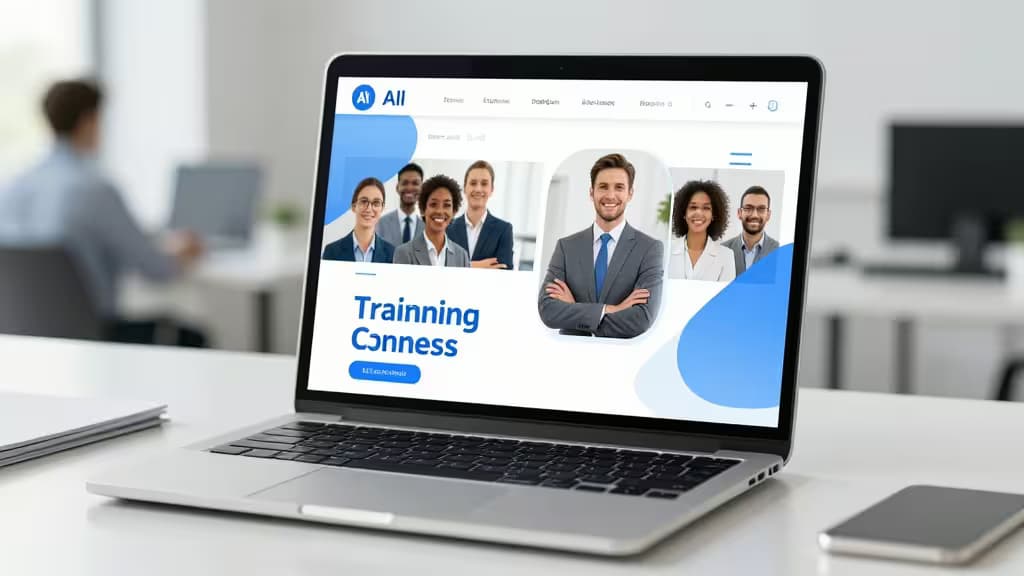
For years, employee training meant a static PDF, a monotone voiceover, and a multiple-choice quiz that everyone clicked through just to get it over with. That era is ending.
AI-powered training platforms now let L&D teams create interactive, video-based modules with realistic avatars, branching scenarios, and real-time translation — in a fraction of the time it used to take. The shift from passive content to adaptive, engaging experiences is the single biggest leap in corporate learning since the LMS itself.1
We evaluated the top contenders on interactivity, ease of use, and global reach to find the tools that actually deliver. Here are the things actually worth buying.
The Best AI Tools for Interactive Employee Training
1. Colossyan — Best for Scenario-Based Corporate Learning
Colossyan was built from the ground up for workplace learning, and it shows. Its standout feature is branching-scenario modules — learners make decisions and the video adapts in real time, turning a passive watch into an active simulation. That kind of interactivity is gold for compliance training, soft skills, and onboarding where context matters.1
The avatar library is polished and professional, and the editor is intuitive enough that instructional designers can produce a module in hours, not weeks. If your goal is to move beyond talking-head videos into genuine decision-based learning, Colossyan is the pick.
Go to Colossyan →
2. HeyGen — Best for High-Quality AI Avatars and Global Translation
HeyGen has quickly become the gold standard for avatar realism. The lip-sync, facial expressions, and voice inflection are remarkably natural — your learners may not realize they're watching an AI presenter. That matters for engagement: a believable avatar keeps attention far longer than a static slide deck.2
Where HeyGen really pulls ahead is global reach. It supports video translation into dozens of languages with voice cloning that preserves tone and cadence. For multinational teams that need one training video to work in English, Spanish, Mandarin, and French — without reshooting — HeyGen is the clear answer.
Go to HeyGen →
3. Synthesia — Best for Scalable Corporate Explainer Videos
Synthesia is the industry incumbent for a reason. With over 140 AI avatar options and support for 120+ languages, it's the most scalable solution for organizations that need to produce training content at volume.1
The platform excels at explainer-style videos — walkthroughs of new software, policy updates, product training — where clarity and consistency matter more than branching interactivity. Its template library and team collaboration features make it a strong choice for L&D departments that produce dozens of modules per quarter.
Go to Synthesia →
4. Canva — Best for Visual Micro-Learning Assets
Canva might not be the first tool that comes to mind for employee training, but its AI-powered design suite has quietly become a powerhouse for micro-learning assets. Think infographics, quick-reference cards, interactive PDFs, and short video snippets that reinforce key concepts between formal training sessions.2
The Magic Studio tools — Magic Write, Magic Design, and AI-powered video editing — let non-designers produce polished visual content in minutes. For L&D teams that want to complement their avatar-driven modules with quick, digestible assets, Canva is an essential part of the stack.
Go to Canva →
How They Compare
| Feature | Colossyan | HeyGen | Synthesia | Canva |
|---|
| Interactivity | Branching scenarios | Linear video | Linear video | Static + short video |
| Ease of Use | Moderate | Easy | Easy | Very Easy |
| Global Reach | 70+ languages | 100+ languages | 120+ languages | 50+ languages |
Why These Tools Win
The common thread across all four picks is speed without sacrificing quality. Traditional video production for training can take weeks — scripting, casting, filming, editing, captioning. AI tools collapse that timeline to days or even hours.1
More importantly, they increase engagement. Avatars, branching scenarios, and visually rich micro-content hold attention spans far better than a wall of text or a recorded Zoom lecture. When learners are actively participating — choosing a path, watching a realistic presenter, scanning a well-designed infographic — retention follows.2
Recomate earns affiliate commissions from some of the products featured here. We only recommend tools we've researched and believe deliver real value for L&D teams.